





A lighter electric bike can make everyday riding much easier, especially in European cities where riders often combine cycling with trains, apartments, elevators, bike storage, and short urban trips.
But how light should an e-bike actually be?
Most standard electric bikes weigh around 20–30 kg, while many modern lightweight electric bikes fall closer to 13.5–20 kg. Some premium carbon models can go even lower.
However, the best lightweight electric bike is not necessarily the lightest one. Battery capacity, motor performance, comfort, range, frame design, and everyday practicality all matter.
This guide looks at what makes a good lightweight e-bike, some of the best options for European riders, and how to choose the right weight for your needs.
What Counts as a Lightweight Electric Bike?
There is no single official weight limit for a lightweight electric bike, but a practical classification is:
E-Bike Weight | Category | Best For |
|---|---|---|
Under 15 kg | Ultra-light | Stairs, carrying, road riding |
15–20 kg | Lightweight | City commuting, daily riding |
20–25 kg | Moderate | Longer range, comfort |
25 kg+ | Standard/Heavy | Cargo, fat tire, long-range use |
For most urban riders, 15–20 kg is a useful target. Bikes in this range can still accommodate practical batteries, motors and everyday components without becoming difficult to carry or store.
Going below 15 kg is possible, particularly with carbon fiber frames and compact batteries, but lower weight often comes with compromises in price, battery capacity or equipment.
Best Lightweight Electric Bikes in Europe: Quick Comparison
Here are some representative lightweight electric bikes available to European riders.
Model | Approx. Weight | Type | Best For |
|---|---|---|---|
Hummingbird Electric | 10.3 kg | Folding | Maximum portability |
Canyon Endurace:ONfly SUB-10 | 9.86 kg | Road | Performance road riding |
Fiido Air | 13.75 kg | City | Lightweight urban commuting |
Specialized Turbo Vado SL | Around 15–17 kg* | City/Commuter | Premium commuting |
Brompton Electric | Around 16–18 kg* | Folding | Train + bike commuting |
Orbea Vibe | Around 16–18 kg* | Urban | Natural city riding |
Tenways CGO600 Series | Around 16 kg* | City | Everyday urban commuting |
Ampler Curt | Around 15 kg* | City | Minimalist city riding |
*Exact weight can vary by model, frame size, battery and configuration. Always check the current specification before purchasing.
Rather than choosing purely by the lowest number on the scale, consider how each bike fits your daily riding.
Best Lightweight Electric Bikes in Europe
Hummingbird Electric — Best for Maximum Portability
If carrying weight is the priority, Hummingbird is one of the most interesting options.
Its carbon construction and compact folding design bring the weight down to around 10 kg, making it particularly suitable for riders who frequently carry their e-bike upstairs, onto trains or into offices.
The trade-off is that an ultra-light folding bike is designed primarily around portability rather than maximum battery capacity or long-distance comfort.
Best for: multimodal commuting, apartments and riders who regularly carry their bike.
Canyon Endurace:ONfly SUB-10 — Best Ultra-Light Road E-Bike
The Canyon Endurace:ONfly SUB-10 takes lightweight design in a completely different direction.
At under 10 kg in its specified configuration, it is closer to a premium endurance road bike than a conventional city e-bike. The compact TQ motor system provides assistance without making the bike feel excessively heavy.
It is an excellent example of what modern lightweight e-bike engineering can achieve, but its premium price and road-focused geometry make it a specialist choice rather than an everyday solution for every commuter.
Best for: performance riders, road cycling and riders who want electric assistance without a heavy e-bike feel.
Fiido Air — Best Lightweight City E-Bike
At approximately 13.75 kg, the Fiido Air demonstrates how carbon fiber can reduce the weight of a full-size urban electric bike.
The relatively low weight makes it easier to carry, manoeuvre and store than many conventional commuter e-bikes. Its minimalist design is also well suited to riders who want an electric bike that looks and handles more like a traditional bicycle.
Best for: city commuters looking for a very light full-size e-bike.
Specialized Turbo Vado SL — Best Premium Lightweight Commuter
The Turbo Vado SL is designed around a simple idea: provide useful electric assistance while keeping the riding experience close to that of a conventional bicycle.
Its relatively lightweight platform makes it easier to pedal without assistance and easier to handle in urban environments than many full-power commuter e-bikes.
It is particularly suitable for riders who value ride quality, refined components and a natural pedal feel more than maximum motor output.
Best for: premium commuting and fitness-oriented city riding.
Brompton Electric — Best for Train and Bike Commuting
Weight is only one part of portability.
Brompton's compact folding system makes its electric models particularly useful for European commuters who regularly switch between cycling and public transport.
A slightly heavier folding bike can sometimes be more practical than a lighter full-size bike simply because it occupies much less space when folded.
Best for: train commuters, small apartments and mixed-mode transportation.
Orbea Vibe — Best for a Natural Riding Experience
The Orbea Vibe follows the increasingly popular “enough power, less weight” approach.
Instead of using a very large motor and battery, the bike focuses on lightweight urban mobility and a more conventional cycling feel.
This makes it suitable for riders who still want to pedal actively but appreciate additional assistance on hills, longer commutes or windy days.
Best for: urban riders who want their e-bike to feel more like a normal bicycle.
Tenways CGO600 Series — Best for Everyday City Commuting
Tenways has become a recognizable option in the European urban e-bike category, particularly among riders looking for simple and relatively lightweight commuter bikes.
Its streamlined city-oriented design makes it suitable for everyday commuting, while the relatively low weight helps with storage and manoeuvring through busy urban environments.
Best for: daily commuting and relatively flat European cities.
Ampler Curt — Best Minimalist Lightweight E-Bike
Ampler's lightweight city bikes are built around discreet electric components and a clean appearance.
The Curt is especially suitable for riders who do not want an e-bike that looks or handles like a heavy electric vehicle. Its minimalist approach makes it attractive for city commuting and everyday transportation.
Best for: riders who prioritize low weight, clean design and natural handling.
Lightweight vs Standard E-Bikes: What Do You Give Up?
A lighter e-bike sounds automatically better, but reducing weight usually requires some compromises.
Lightweight E-Bike | Standard E-Bike |
|---|---|
Easier to carry | Usually larger battery |
Easier to store | Often longer range |
More agile handling | Higher payload options |
Easier to pedal without assistance | More powerful motor options |
Better for stairs and trains | Better for heavy-duty riding |
Often smaller battery | Better suited to cargo applications |
This is why the lightest electric bike is not always the best electric bike.
If you ride 8 km to work and carry your bike upstairs every day, saving 5 kg can make a major difference.
If you regularly ride 70 km, carry cargo or climb steep hills, sacrificing battery capacity just to reduce weight may not make sense.
How Light Should Your E-Bike Be?
Instead of asking “What is the lightest e-bike?”, ask:
How much weight do I actually need to save?
Under 15 kg: Best for Frequent Carrying
Choose an ultra-light e-bike if you regularly:
Carry your bike upstairs
Take it onto trains
Lift it into a vehicle
Store it inside an apartment
Want a road-bike-like riding experience
This category often uses carbon fiber, smaller batteries and highly integrated components.
15–20 kg: Best Balance for City Commuting
For many European commuters, this is the sweet spot.
A 15–20 kg lightweight commuter e-bike can offer a useful balance between portability, range, comfort and price.
It is light enough to handle around apartments and public transport while still allowing manufacturers to fit practical batteries, lights, brakes and everyday commuter components.
20–25 kg: Better When Range Matters More
A bike does not suddenly become impractical because it weighs more than 20 kg.
This range can actually be better for riders who prioritize:
Larger batteries
Longer commuting distances
Suspension
More accessories
Higher payload
Greater comfort
If you rarely carry the bike, saving another 3–5 kg may provide little real benefit.
Does a Lighter E-Bike Mean Less Range?
Not necessarily, but there is often a relationship between bike weight and battery size.
The battery is one of the heaviest components on an electric bike. Reducing battery capacity is therefore one of the easiest ways to reduce total bike weight.
For example, a lightweight city e-bike might use a 250–400Wh battery, while a heavier trekking or long-range e-bike may use 500Wh, 625Wh, 750Wh or more.
But battery size is only part of the range equation.
A lighter bike requires less energy to accelerate and move uphill. Efficient tires, motor tuning, rider weight, terrain, weather and assist level also affect real-world range.
This means a well-designed lightweight e-bike with a smaller battery can still provide enough range for daily city commuting.
If your daily commute is relatively short, carrying a large battery that you rarely use may simply add unnecessary weight.
What About Hills?
Lightweight e-bikes can perform well on hills, but weight alone does not determine climbing ability.
Pay attention to:
Motor torque
Motor type
Gear range
Total rider and bike weight
Torque sensor performance
Battery output
A lightweight bike with a well-tuned motor and suitable gearing can feel surprisingly capable on moderate climbs.
For cities with frequent or steep hills, however, choosing the absolute lightest model may not be the best strategy.
A slightly heavier bike with stronger torque and better gearing can provide a much better everyday experience.
Carbon Fiber vs Aluminum: Which Is Better for a Lightweight E-Bike?
Frame material has a major influence on weight.
Carbon fiber offers an excellent strength-to-weight ratio and allows manufacturers to create very lightweight frames. This is why many ultra-light electric bikes use carbon construction.
The disadvantages are higher manufacturing costs and typically higher retail prices.
Aluminum alloy remains the most common option for mainstream lightweight commuter e-bikes. It is relatively light, durable, cost-effective and suitable for large-scale production.
For most city riders, a well-designed aluminum frame provides a practical balance.
For premium bikes where every kilogram matters, carbon fiber becomes more attractive.
Which Lightweight E-Bike Is Right for You?
The best lightweight electric bike depends more on your daily routine than the number printed on the specification sheet.
Living in an apartment with stairs?
Look for a bike under approximately 18 kg, especially if you carry it every day.
Combining cycling with trains?
Consider a lightweight folding electric bike. Folded size can be just as important as total weight.
Daily city commuting?
A 15–20 kg city e-bike offers one of the best balances between portability and everyday practicality.
Riding in a hilly European city?
Do not choose by weight alone. Motor torque, gearing and sensor performance should also influence your decision.
Taking long weekend rides?
Prioritize battery capacity, riding position and comfort before chasing the lowest possible weight.
Looking for easier mounting and handling?
A lightweight step-through electric bike can combine a lower frame with easier manoeuvrability.
The goal should be to find the lightest bike that still meets your actual riding requirements, rather than simply buying the lightest model available.
Lightweight E-Bikes for European Brands and Distributors
Lightweight electric bikes are also becoming an important category for European e-bike brands, distributors and private-label businesses.
But developing a lightweight e-bike involves more than reducing frame weight.
Frame material, battery capacity, motor configuration, geometry, payload, component selection and target retail price all need to work together.
For example, an urban commuter platform may prioritize a lightweight aluminum frame, integrated battery and compact rear hub motor. A premium model may use carbon fiber and more integrated components to reduce weight further.
Nordvia supports OEM and ODM electric bike projects for European brands, including city, commuter, folding and step-through platforms. Depending on the target market and positioning, frame design, battery capacity, motor system, display, colors, accessories and other components can be configured around the project's requirements.
For distributors, a useful question is therefore not simply:
“How light can we make the bike?”
It is:
“What is the right balance of weight, range, performance and price for our target customer?”
That approach usually leads to a more competitive product.
FAQs About Lightweight Electric Bikes
What is considered a lightweight electric bike?
Most lightweight urban electric bikes weigh approximately 13.5–20 kg. Models under 15 kg can be considered ultra-light, while 15–20 kg is a practical range for many everyday commuter e-bikes.
What is the lightest practical e-bike for daily commuting?
Some electric bikes weigh around 10 kg, but extremely low weight is not always ideal for daily use. For most commuters, a full-size e-bike between approximately 13 and 18 kg offers a better balance of portability, range and comfort.
Are lightweight electric bikes good for hills?
Yes, provided the motor, gearing and torque are suitable. A lighter total weight can help climbing efficiency, but riders in very hilly areas should not sacrifice motor performance simply to save a few kilograms.
How much range can a lightweight electric bike have?
There is no fixed range. Lightweight models often use smaller batteries to reduce weight, but efficient motors and lower total mass can compensate to some extent. Actual range depends on battery capacity, terrain, rider weight, temperature, assist level and riding style.
Is a lightweight e-bike better for city commuting?
For many riders, yes. Lightweight e-bikes are easier to manoeuvre, store, carry upstairs and combine with public transportation. However, riders with long commutes may benefit more from a larger battery than from the lowest possible bike weight.
Final Thoughts
The best lightweight electric bikes in Europe show that an e-bike does not need a large motor and oversized battery to be practical.
For riders dealing with apartments, stairs, trains and busy city streets, reducing weight can make an electric bike significantly easier to use every day.
But there is no reason to chase the lowest number on the scale.
Under 15 kg is excellent for maximum portability.
15–20 kg is often the best balance for city commuting.
20–25 kg can make more sense when range, comfort and equipment matter more.
Ultimately, the best lightweight e-bike is the one that balances weight, battery capacity, motor performance, range, comfort and price around how you actually ride.
RELATED NEWS
-
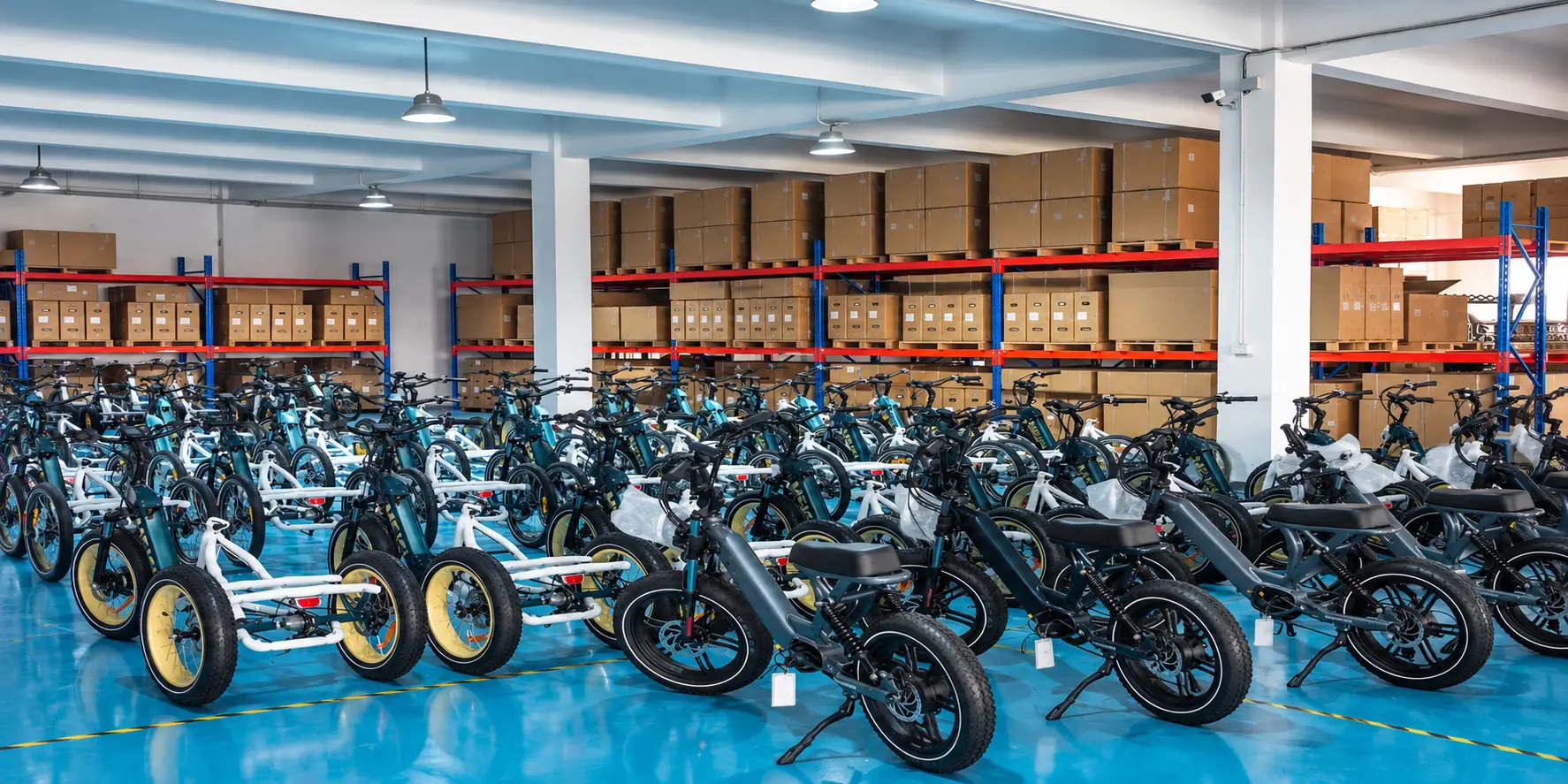 What Determines E-Bike Shipping Costs from China to Europe?The most effective ways to reduce e-bike shipping costs from China to Europe include optimizing export packaging, maximizing container utilization, selecting suitable freight methods, consolidating orders and planning shipments in advance.Fo
-
 Yes, you can sell Chinese-made electric bikes under your own brand in Europe. Many European e-bike brands work with Chinese OEM and ODM manufacturers to develop private label electric bikes, customize components, and manage production costs.However, selling e-bikes under your own brand involves more
-
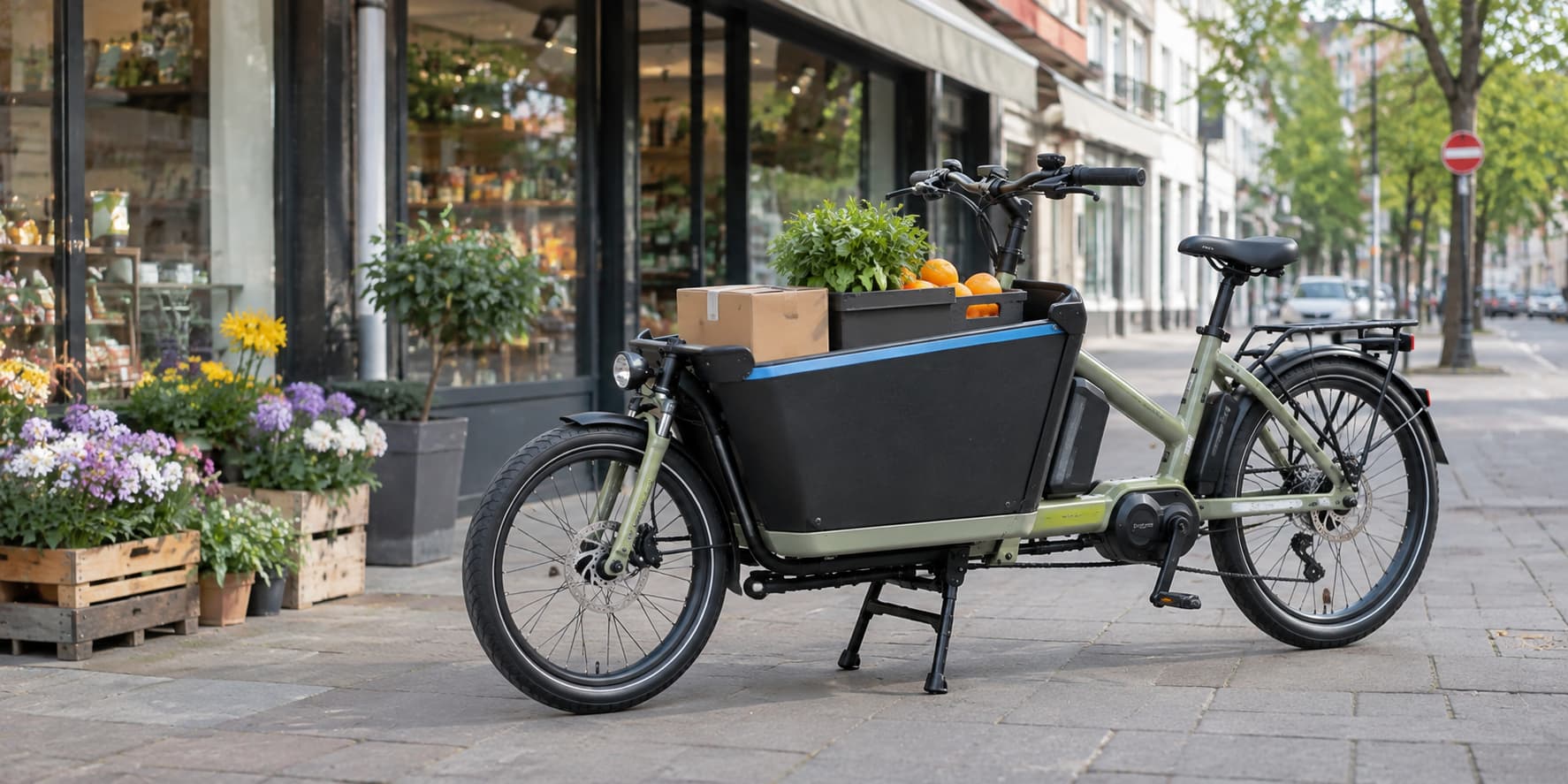 Electric cargo bikes are becoming a practical transport solution for small businesses across Europe. From last-mile deliveries and food distribution to retail logistics and mobile services, commercial electric cargo bikes help companies move goods efficiently while reducing fuel consumption, parking
