




How Long Can an E-Bike Battery Last With Proper Care?
There is no fixed lifespan for every e-bike battery. Battery quality, charging cycles, temperature, storage conditions, riding frequency, and power demand all influence how quickly usable capacity decreases.
Instead of focusing only on battery age, pay attention to actual performance. A noticeable reduction in range, irregular charging, unexpected power drops, or abnormal heat can be more useful indicators of battery condition.
Good battery maintenance mainly comes down to three things: avoiding unnecessary charging stress, controlling temperature, and storing the battery correctly when it is not in use.
10 Electric Bike Battery Maintenance Tips
1. Avoid Regularly Draining the Battery to 0%
There is no need to fully discharge an e-bike battery before charging it.
For daily commuting and regular riding, recharge when convenient rather than deliberately waiting for the battery to reach 0%.
Repeated deep discharges can create more stress on lithium-ion batteries than partial discharge cycles. If you know you will need the bike the next day, charging earlier is usually more practical than using every remaining percentage first.
2. Don't Keep the Battery at 100% Longer Than Necessary
Charging to 100% is useful before a long ride, but the battery does not need to remain fully charged for extended periods.
If you need maximum range tomorrow, a full charge makes sense. If the bike will sit unused for several weeks, keeping the battery fully charged is unnecessary.
For riders who frequently make short city trips, charging according to the range actually needed can be more suitable than automatically topping up to 100% every time.
3. Use the Charger Designed for Your Battery
Do not choose a replacement charger simply because the connector fits.
E-bike chargers can differ in voltage, charging current, connectors, and compatibility with the battery management system. Using an incompatible charger may cause charging problems and can create safety risks.
For replacement chargers, check the specifications of the original battery and charger or use an option approved by the e-bike or battery manufacturer.
4. Don't Charge a Battery Immediately After Extreme Cold or Heat
Temperature is one of the most important factors in battery charging.
If the bike has been outside in freezing conditions, bring the battery indoors and allow it to reach an appropriate charging temperature before connecting the charger.
The same applies after demanding riding in hot weather. If the battery feels unusually warm after a long climb, cargo trip, or high-assistance ride, allow it to cool before charging.
Avoid charging a lithium-ion battery below freezing unless the battery system is specifically designed to support it.
5. Keep the Battery Away From Prolonged Heat
High temperatures can accelerate battery aging, particularly when the battery is also at a high state of charge.
Avoid leaving an e-bike battery for long periods inside a hot vehicle, beside a heater, or in direct summer sunlight.
For distributors and fleet operators storing multiple e-bikes, battery storage temperature is also worth considering when planning warehouse conditions.
6. Store the Battery at a Partial Charge
If the e-bike will not be used for several weeks or months, do not simply charge it to 100% and leave it.
Battery manufacturers may recommend different storage charge levels. Bosch, for example, has recommended approximately 30–60% for lengthy storage, while other systems may specify a different range.
The important point is to follow the recommendation for your specific battery rather than assuming one percentage applies to every e-bike.
Store the battery in a dry indoor location with a relatively stable temperature and check it periodically during extended storage.
7. Keep Battery Contacts and Charging Ports Clean and Dry
Regularly inspect the battery contacts, charging port, and mounting area, particularly if the e-bike is frequently used in rain, mud, or winter conditions.
Avoid directing high-pressure water toward electrical components when cleaning the bike.
Before charging or reinstalling the battery, make sure the contacts and charging area are clean and dry.
If you notice corrosion, damaged connectors, loose contacts, or water inside the charging area, have the system checked before continuing to use it.
8. Don't Leave a Discharged Battery Unused for Months
Long-term storage is one of the easiest situations in which battery maintenance gets overlooked.
If an e-bike will not be used throughout winter or for several months, check the battery periodically rather than leaving it untouched until the next riding season.
Recharge it when necessary according to the manufacturer's storage recommendations.
This is particularly important for seasonal e-bike users and businesses holding e-bikes in inventory for extended periods.
9. Reduce Unnecessary Battery Consumption
Riding habits affect how often the battery needs to be charged.
Maximum assistance, steep hills, heavy cargo, frequent acceleration, low tire pressure, and inefficient gear selection can all increase energy consumption.
That does not mean riders should avoid high assistance when it is needed. Instead, use the assistance level appropriate for the terrain and riding situation.
For example, a cargo e-bike carrying a heavy load uphill naturally requires more battery power than a lightweight city e-bike on flat roads.
10. Pay Attention to Changes in Battery Performance
Battery maintenance should include watching for changes rather than waiting for complete failure.
Common warning signs include:
Significantly shorter range under similar conditions
Battery percentage dropping unusually quickly
Unexpected shutdowns
Charging repeatedly stopping or failing
Abnormal heat during charging or riding
Visible swelling, cracks, impact damage, or deformation
A gradual reduction in range can be normal as a battery ages. Sudden or severe changes should be inspected.
If the battery shows physical damage, swelling, leakage, unusual odor, or excessive heat, stop using and charging it and contact the manufacturer or a qualified service provider.
How Should You Store an E-Bike Battery for Several Months?
For long-term storage, focus on charge level, temperature, moisture, and periodic checks.
Keep the battery partially charged according to the manufacturer's recommendation and store it in a cool, dry indoor location. Avoid freezing environments, direct sunlight, heaters, and places with significant temperature fluctuations.
Check the charge periodically during storage rather than leaving the battery untouched for an entire season.
Before returning the battery to regular use, inspect the casing, contacts, and charging behavior.
If you are storing the entire electric bike during winter, battery care should be handled separately from general bike storage and maintenance.
How Should You Care for an E-Bike Battery in Winter?
European winter conditions can temporarily reduce battery range, especially during colder rides.
If possible, keep a removable battery indoors before riding rather than leaving it overnight in freezing conditions. Install it shortly before departure.
After riding in very cold weather, allow the battery to reach an appropriate indoor temperature before charging.
Riders should also expect winter range to differ from summer range. Temperature, wind, road conditions, tire pressure, and increased assistance can all contribute to higher energy consumption.
For daily commuters in colder European markets, planning some additional range reserve during winter is more practical than relying on the maximum range achieved in warmer weather.
When Should You Replace an Electric Bike Battery?
A battery does not necessarily need replacing simply because it is several years old.
Replacement becomes more relevant when declining capacity begins to affect normal use—for example, when a commuter can no longer complete a regular route comfortably on one charge.
Unexpected shutdowns, major charging problems, abnormal temperature, physical damage, or rapidly declining performance should be professionally inspected.
For brands and distributors, replacement battery availability is also an important part of after-sales planning. A good e-bike specification should consider not only initial battery capacity but also long-term battery compatibility and replacement support.
E-Bike Battery Maintenance FAQ
Should I Charge My E-Bike Battery After Every Ride?
Not necessarily. If enough range remains for your next trip, there is no requirement to recharge to 100% after every short ride.
Should I Charge My E-Bike Battery to 100%?
Charge to 100% when maximum range is useful, such as before a longer journey. For shorter daily trips or long-term storage, a full charge is not always necessary.
Can I Charge an E-Bike Battery When It Is Cold?
Avoid charging a battery that is still at freezing temperature unless the manufacturer specifically states that the battery supports it. Allow a very cold battery to warm to the recommended charging-temperature range first.
What Is the Best Battery Level for Long-Term Storage?
There is no universal percentage for every e-bike battery. Many manufacturers recommend partial charge for extended storage, but the exact level varies by battery system. Follow the manufacturer's instructions for your specific model.
Why Does My E-Bike Have Less Range in Winter?
Cold temperatures can temporarily reduce battery performance. Winter riding may also involve stronger winds, lower tire pressure, heavier clothing, and greater use of motor assistance, all of which can increase energy consumption.
Better Battery Care Starts With the Right E-Bike System
Battery maintenance can help extend useful battery life, but battery quality and system design matter from the beginning.
For brands, importers, and distributors sourcing electric bikes for Europe, battery selection should consider more than capacity alone. Cell quality, BMS configuration, charger compatibility, motor power, expected range, frame integration, replacement availability, and target riding conditions should be evaluated as a complete system.
Nordvia supports OEM and ODM e-bike projects with battery configurations matched to different applications, including city commuter, trekking, folding, cargo, and other electric bike platforms.
For example, an urban commuter designed for short daily journeys may prioritize lower weight and practical range, while a cargo e-bike or trekking model may require greater battery capacity to support heavier loads, hills, or longer distances.
Choosing the right battery specification from the start—and maintaining it correctly afterward—helps deliver more consistent performance throughout the e-bike's service life.
RELATED NEWS
-
 Why Germany Is Home to Some of Europe's Best E-Bike Brands Germany is widely recognized as the center of Europe's e-bike industry. Home to world-class component suppliers such as Bosch, Pinion, and Rohloff, Germany has built a strong reputation for engineering quality, innovation, and product reliab
-
 Spain is becoming an increasingly attractive market for electric bikes. From daily commuting in Madrid and Barcelona to coastal routes, mountain trails and weekend touring, e-bikes offer a practical way to travel farther with less effort.The Spanish market also has a strong mix of local and European
-
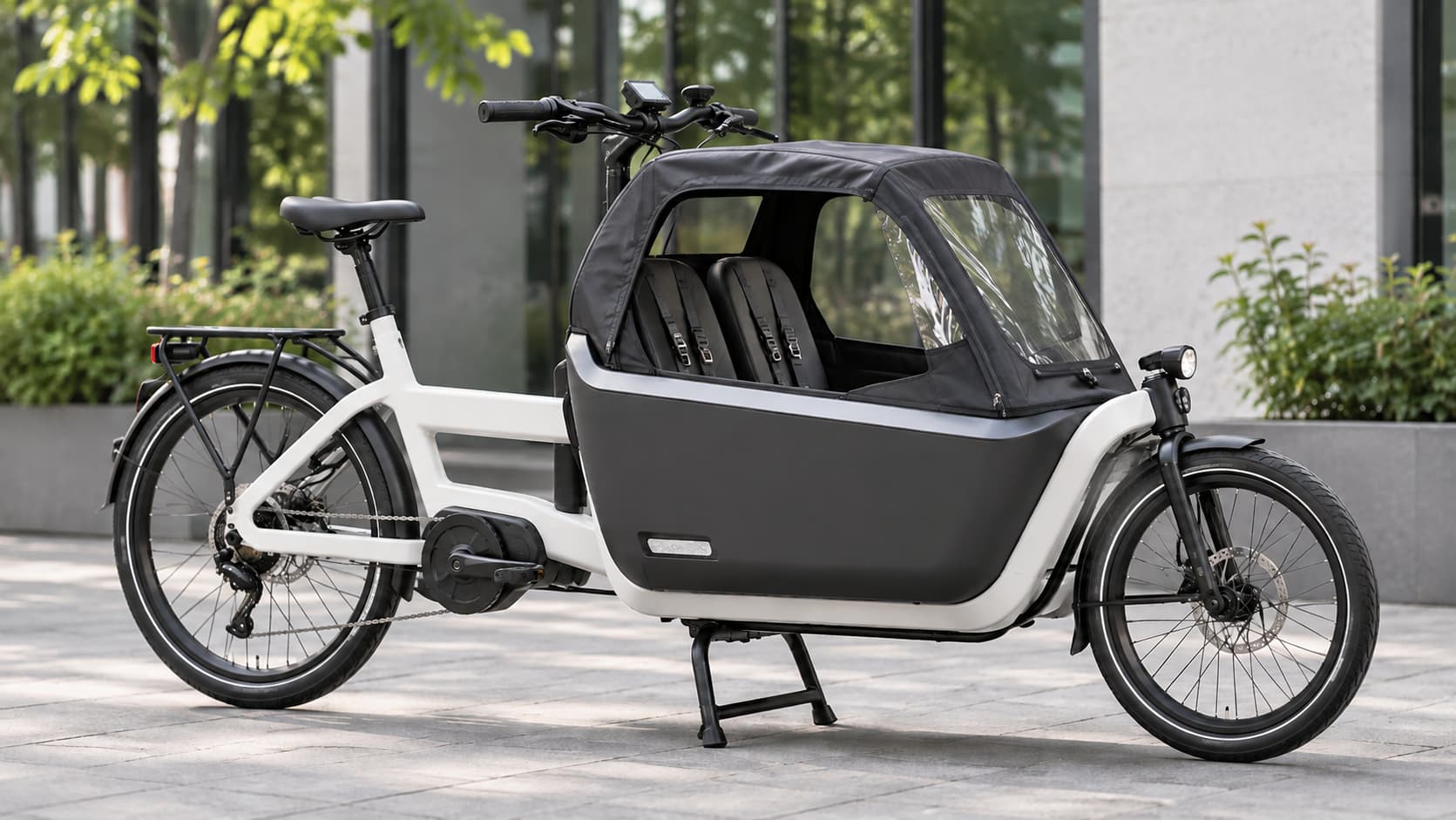 Germany is one of Europe's important markets for electric cargo bikes, with growing applications in family transportation, urban commuting, and commercial delivery. From compact longtail e-bikes to heavy-duty cargo tricycles, manufacturers offer a wide range of solutions for different mobility needs
