



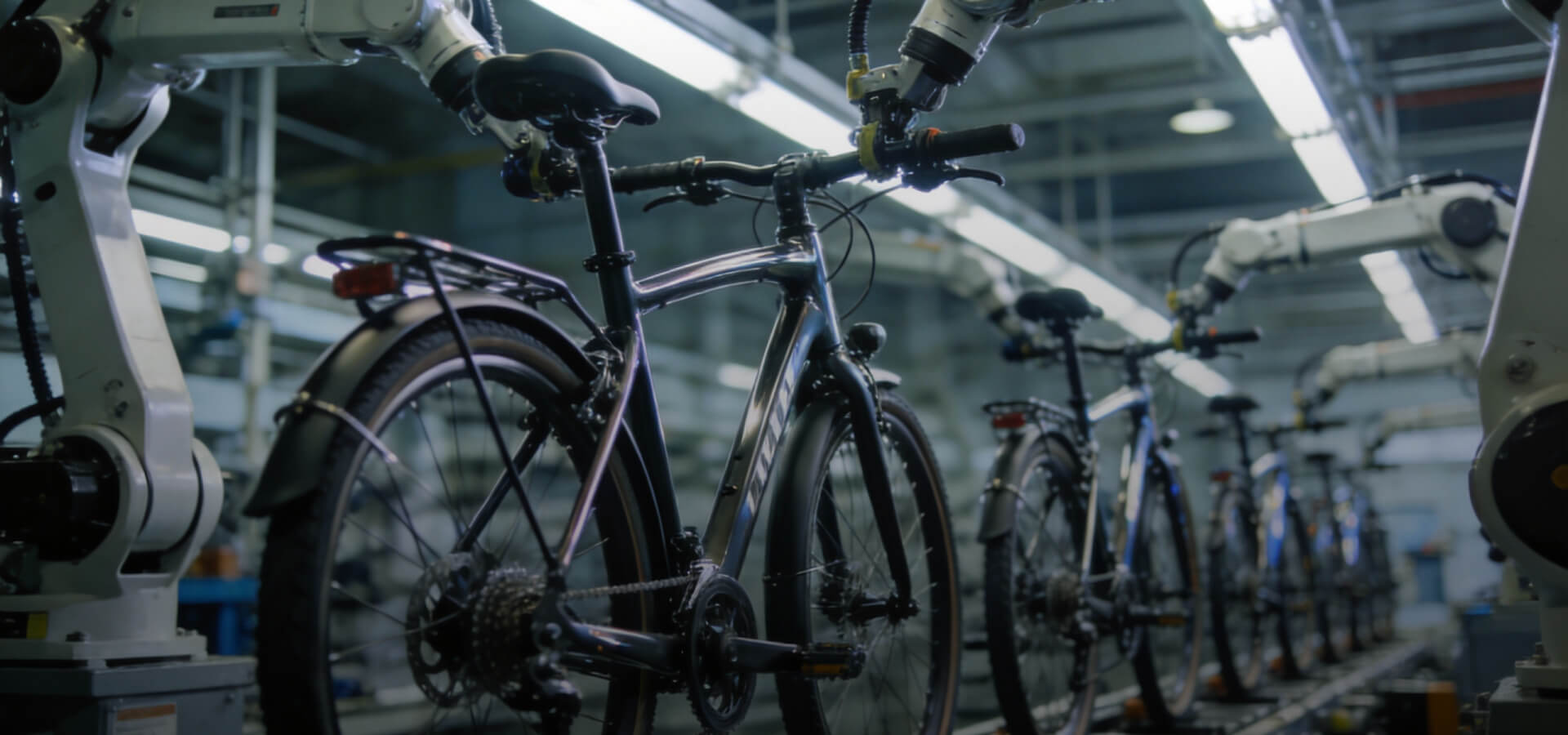

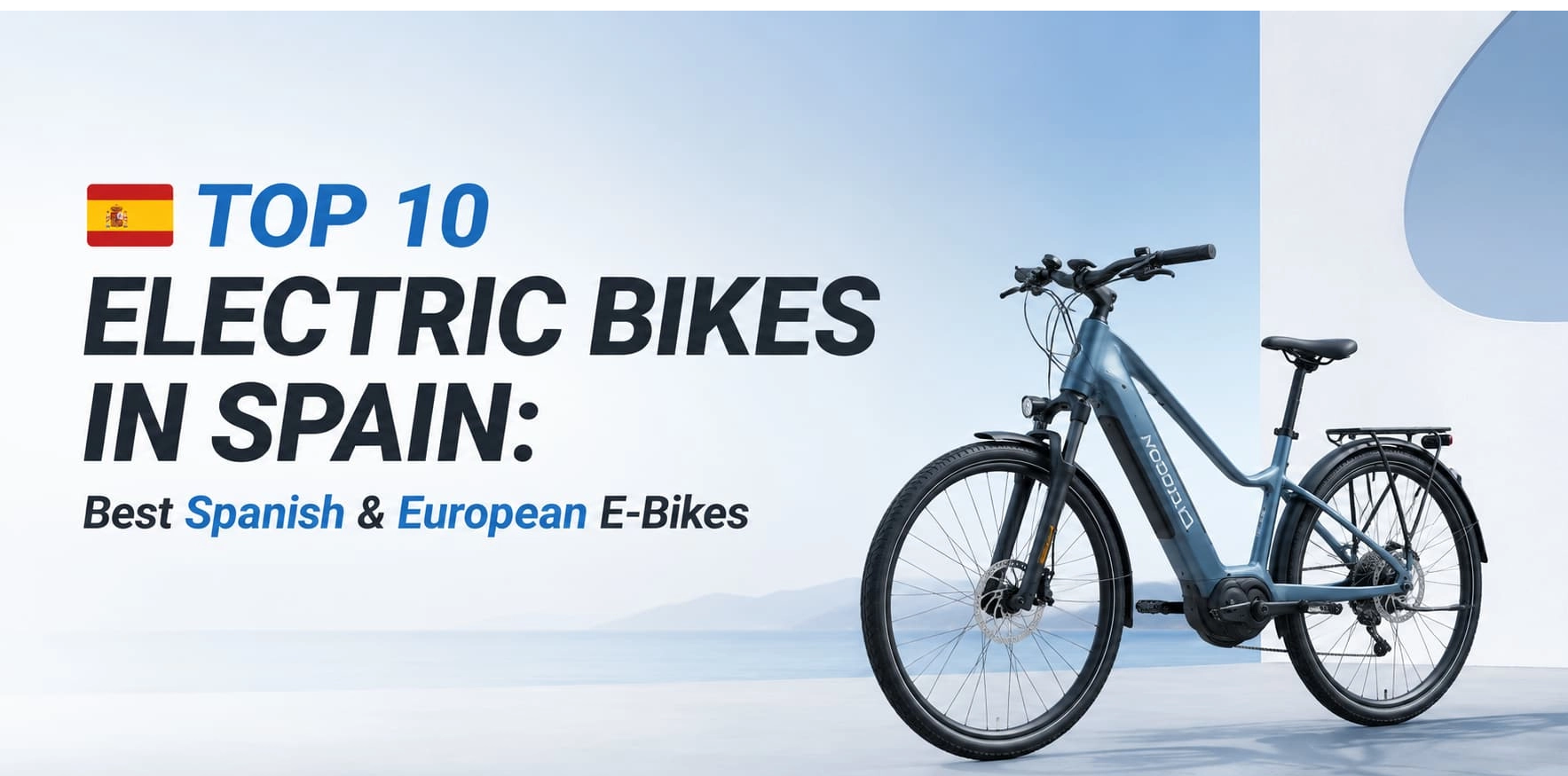
Spain is becoming an increasingly attractive market for electric bikes. From daily commuting in Madrid and Barcelona to coastal routes, mountain trails and weekend touring, e-bikes offer a practical way to travel farther with less effort.
The Spanish market also has a strong mix of local and European brands. Established Spanish names such as Orbea and BH compete alongside urban-focused brands such as Moma, Desiknio and Legend, while major European manufacturers offer additional options for trekking, touring and everyday mobility.
In this guide, we look at 10 notable Spanish and European electric bike brands and models for different riding needs.
Top 10 Electric Bikes in Spain at a Glance
Brand / Model | Country | Best For |
|---|---|---|
Orbea Kemen | Spain | Best Overall |
BH iLynx+ | Spain | Electric Mountain Biking |
Moma E-Bike 28 Pro | Spain | City Commuting |
Desiknio | Spain | Premium Lightweight Riding |
Legend E-Bikes | Spain | Urban & Folding |
Canyon Pathlite:ON | Germany | Trekking & Long Distance |
CUBE Kathmandu Hybrid | Germany | Touring |
Riese & Müller Charger | Germany | Premium Commuting |
TENWAYS CGO Series | Netherlands | Lightweight City Riding |
Decathlon E-Bikes | France | Value & Everyday Riding |
1. Orbea Kemen — Best Overall E-Bike
Orbea is one of Spain's most established bicycle manufacturers and a strong name in the European cycling industry.
The Kemen range combines everyday practicality with the versatility expected from a modern urban and trekking e-bike. It is suitable for commuting, leisure riding and longer weekend journeys.
Its balanced design makes it particularly attractive for riders who want one electric bike that can handle several different riding scenarios rather than purchasing a highly specialized model.
Best for: Commuting, leisure and mixed everyday riding.
Why consider it: Spanish brand, versatile design and strong all-round usability.
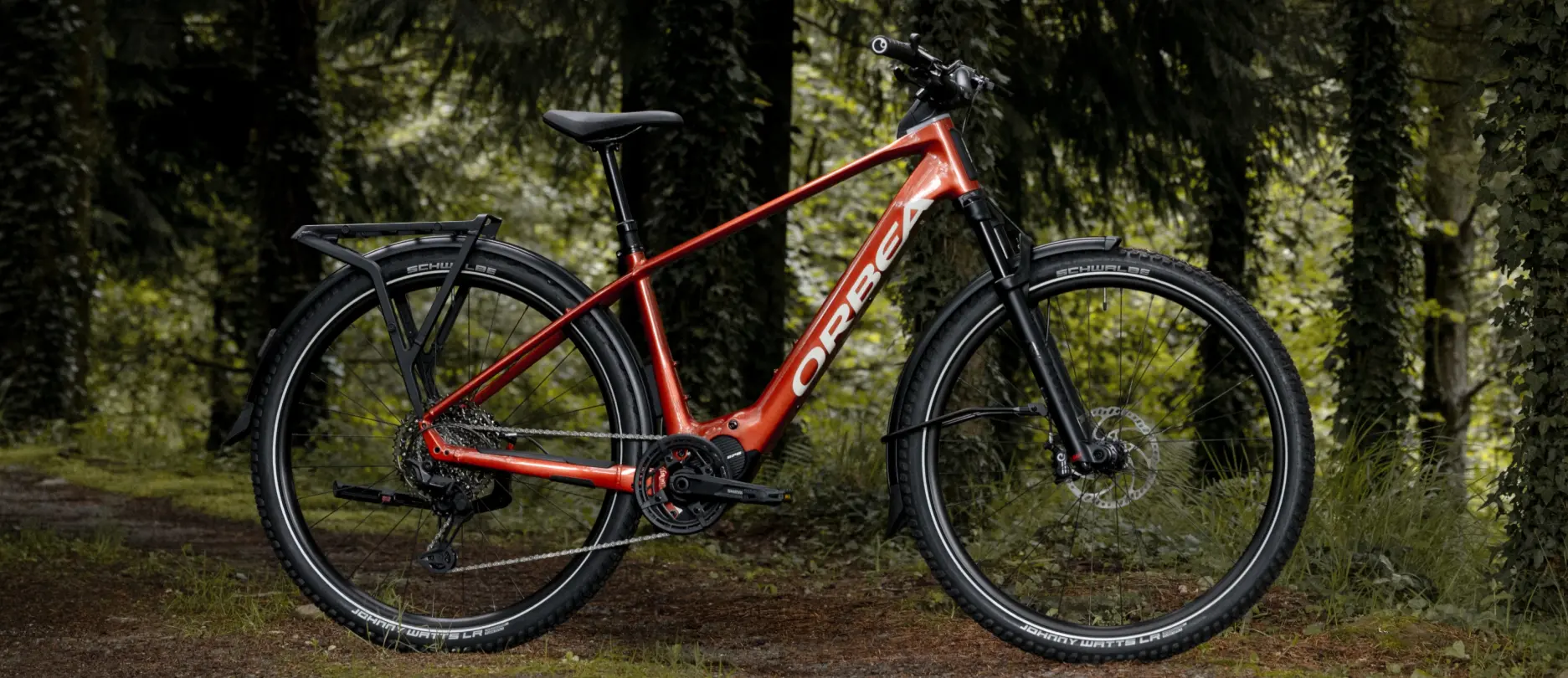
2. BH iLynx+ — Best Electric Mountain Bike
BH Bikes is another established Spanish bicycle manufacturer with deep roots in performance cycling.
The iLynx+ is designed primarily for electric mountain biking, with a strong focus on climbing, trail riding and more demanding terrain.
Spain offers extensive mountain and off-road cycling opportunities, making this type of e-bike particularly relevant for riders looking beyond everyday urban transportation.
Best for: Mountains, trails and recreational off-road riding.
Why consider it: Performance-focused design and strong Spanish cycling heritage.
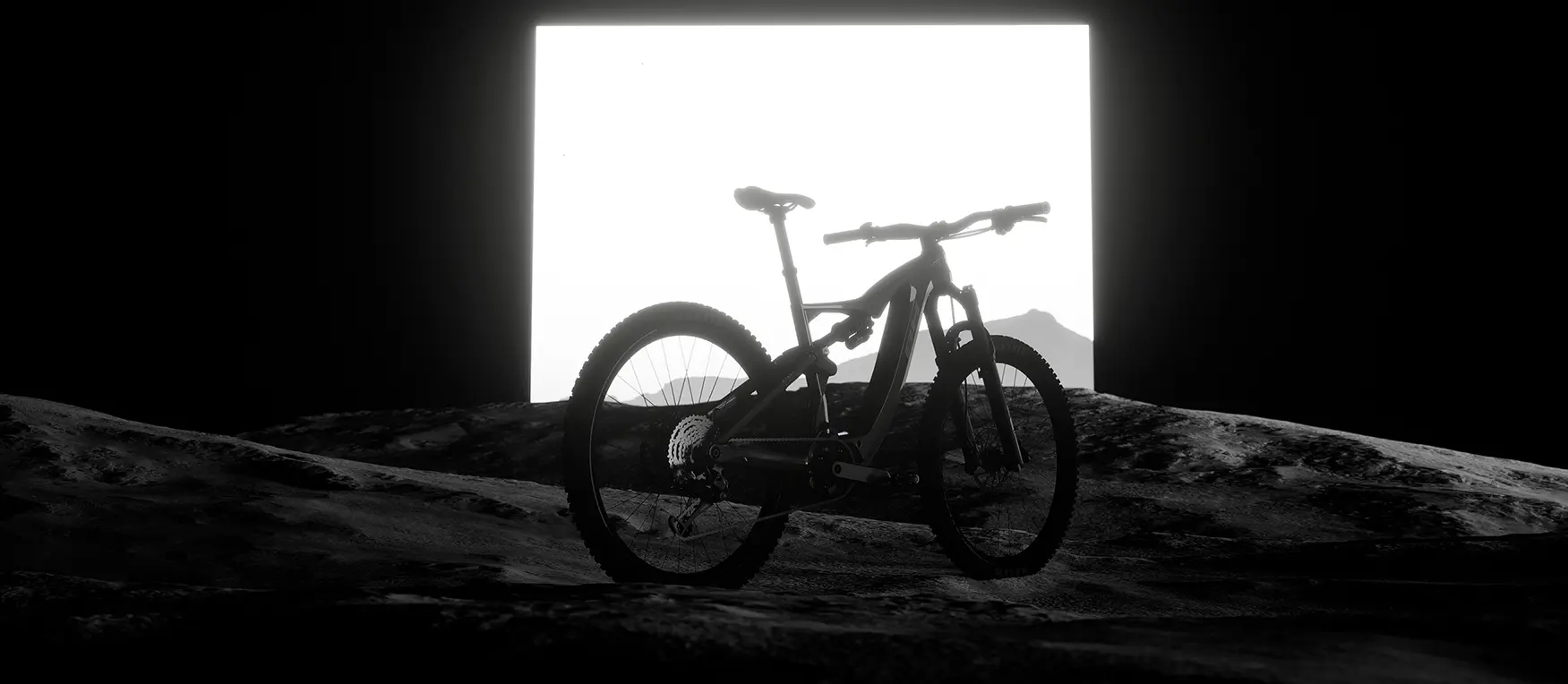
3. Moma E-Bike 28 Pro — Best Value City E-Bike
Moma Bikes offers a different proposition from performance-oriented Spanish brands.
The E-Bike 28 Pro is focused on everyday urban mobility. It combines a 250W brushless motor with a 624Wh removable integrated battery, hydraulic disc brakes and a Shimano 7-speed drivetrain.
These specifications make it particularly suitable for commuting, shopping and regular city journeys.
For riders who prioritize practical features and value rather than premium performance components, Moma is worth considering.
Best for: Daily urban commuting.
Why consider it: Practical equipment, large battery capacity and accessible positioning.
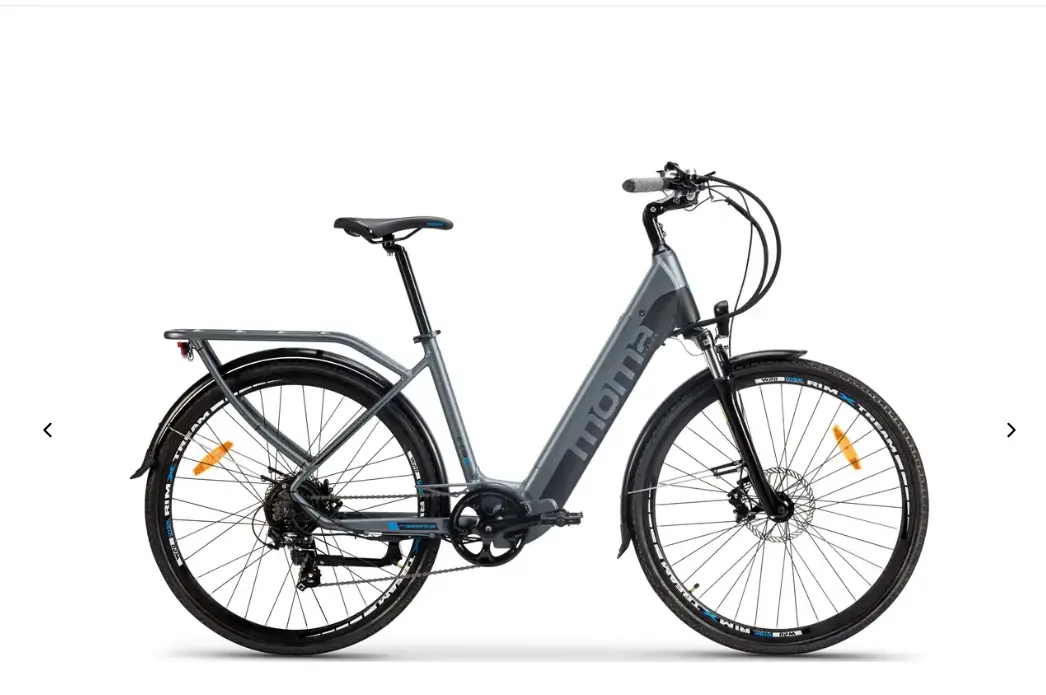
4. Desiknio — Best Premium Lightweight E-Bike
Desiknio represents another side of Spain's growing electric bicycle industry.
Instead of building large and heavy e-bikes, the brand focuses on lightweight designs with clean styling and discreet electric assistance.
This approach is particularly attractive for urban riders who want the convenience of electric assistance without losing the appearance and handling characteristics of a conventional bicycle.
Lightweight e-bikes are also useful for apartment living, carrying the bike upstairs or combining cycling with other forms of transportation.
Best for: Premium urban riding and lightweight mobility.
Why consider it: Lightweight construction, minimalist styling and European urban design.
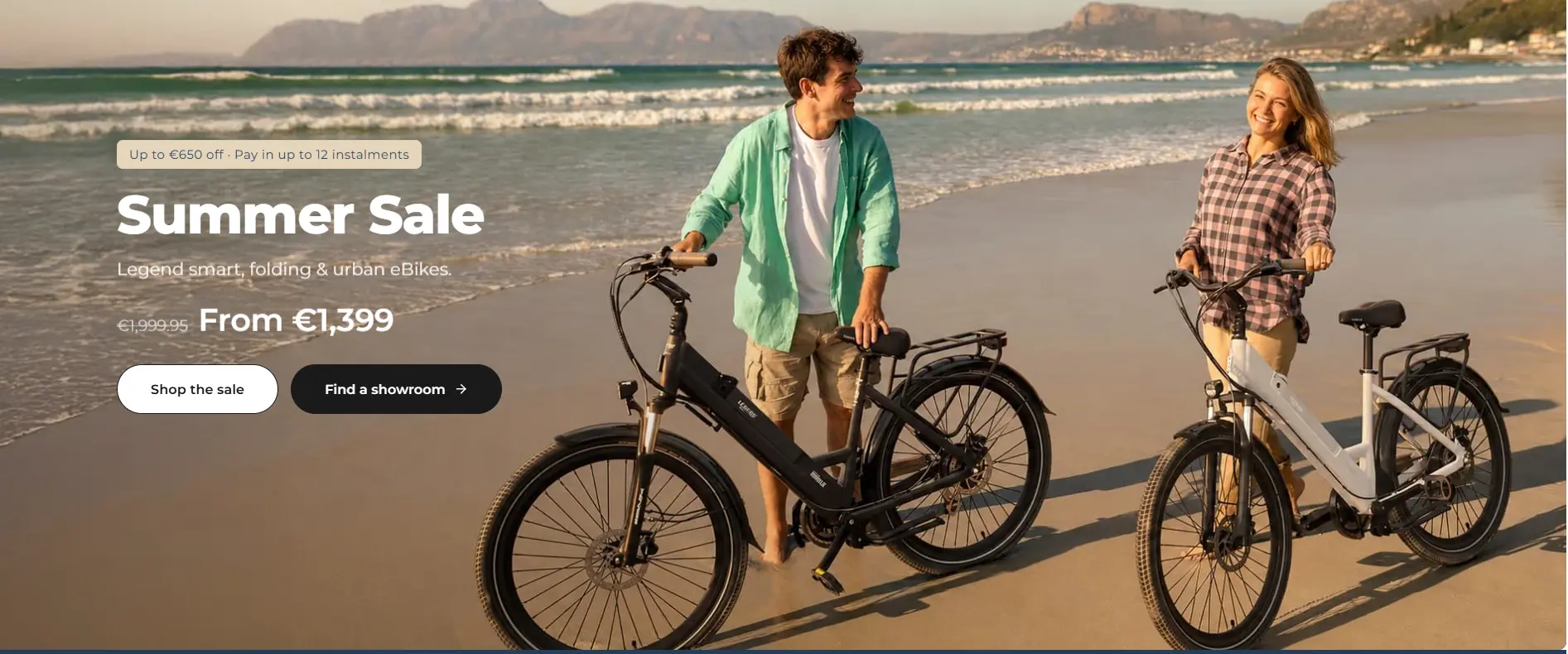
5. Legend E-Bikes — Best Urban & Folding E-Bike
Legend E-Bikes is particularly relevant for riders looking for practical urban and folding electric bicycles.
The company states that its bikes are designed in Spain, use MAHLE technology and are manufactured in Portugal, making the brand an interesting example of European e-bike development and production.
Folding models are particularly useful in dense urban areas where storage space is limited or where riders combine cycling with cars, trains or other forms of transportation.
Best for: Urban mobility, folding bikes and mixed transportation.
Why consider it: Spanish design, European production and practical urban focus.
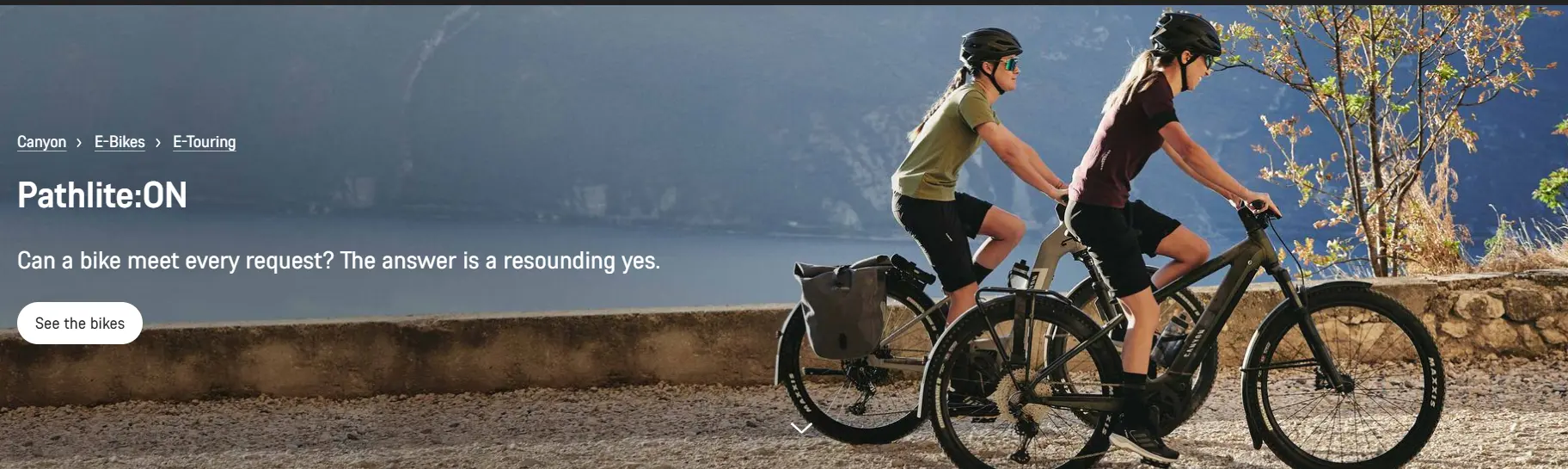
6. Canyon Pathlite:ON — Best Trekking E-Bike
German brand Canyon offers several electric bike categories for the Spanish market, with the Pathlite:ON range standing out for trekking and longer-distance riding.
The Pathlite:ON family includes different approaches.
The Pathlite:ON SUV focuses on power, comfort and all-terrain versatility, while the lighter Pathlite:ONfly is designed for riders who want more agile handling.
The Pathlite:ONfly uses the compact Bosch Performance Line SX system with a 400Wh battery, while more powerful SUV versions use Bosch Performance Line CX systems.
This makes the range suitable for everything from daily commuting to weekend touring and light off-road exploration.
Best for: Trekking, suburban commuting and longer rides.
Why consider it: Bosch drive systems, versatile configurations and strong long-distance capability.
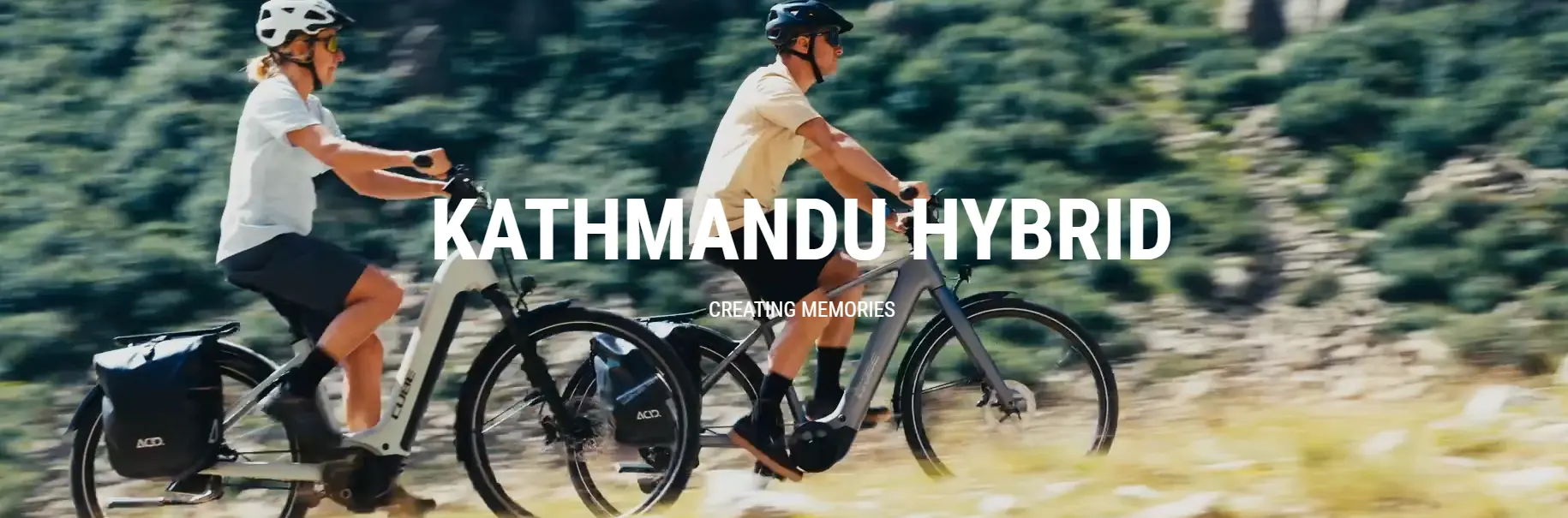
7. CUBE Kathmandu Hybrid — Best Touring E-Bike
CUBE is another major German bicycle manufacturer with a strong presence in European cycling.
The Kathmandu Hybrid range is designed around trekking and touring, combining electric assistance with practical equipment for longer journeys.
This type of bike is particularly useful for riders who regularly travel beyond city centres or want one e-bike for both commuting and recreational touring.
Compared with a lightweight city bike, a trekking model generally prioritizes stability, range, carrying capacity and long-distance comfort.
Best for: Touring and long-distance commuting.
Why consider it: Trekking-focused design, practical equipment and European market presence.
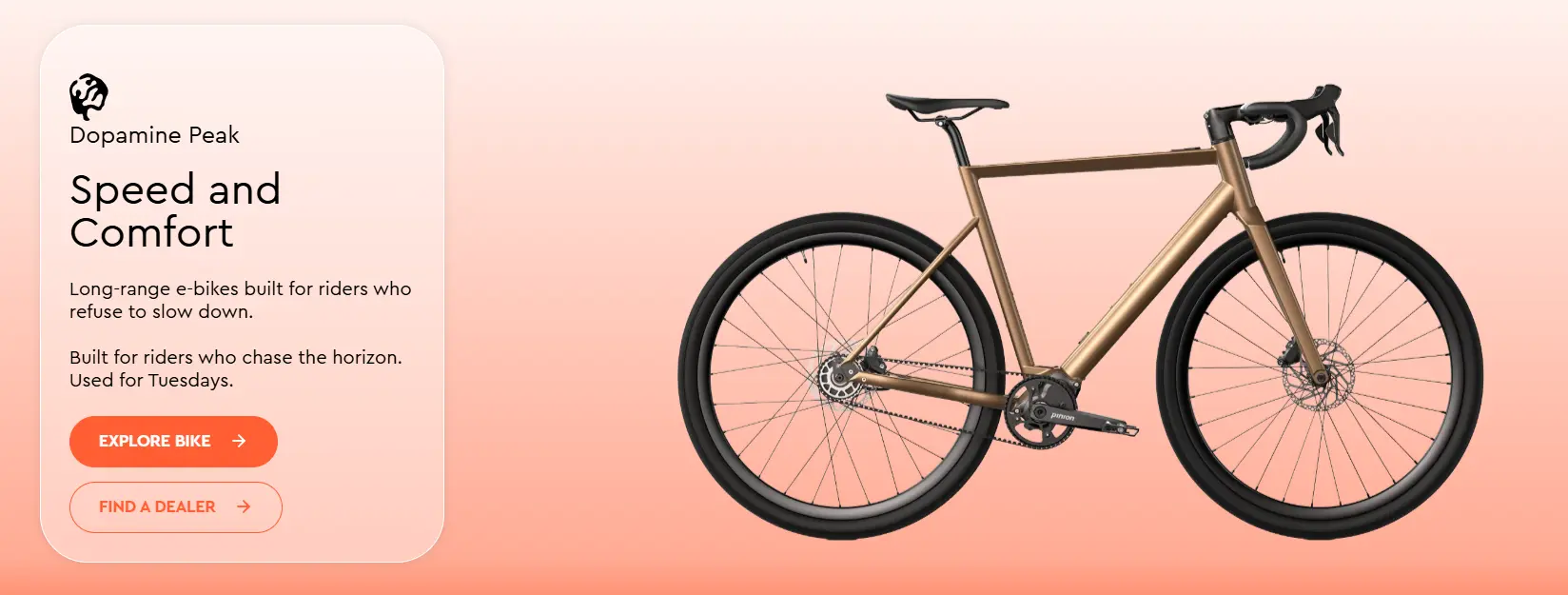
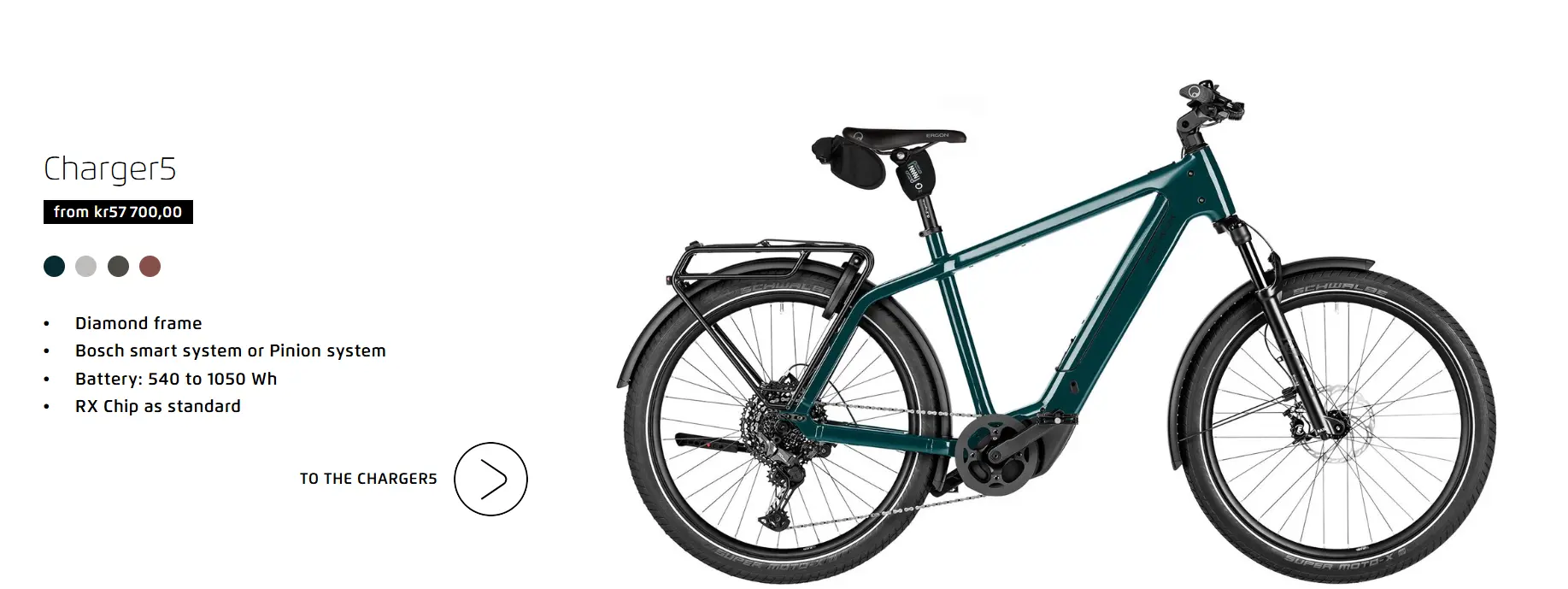
8. Riese & Müller Charger — Best Premium Long-Distance E-Bike
Riese & Müller represents the premium end of the German electric bicycle market.
The Charger family is aimed at riders who see an e-bike as a serious everyday transportation solution rather than simply a recreational bicycle.
Comfort, integrated equipment and long-distance usability are central to this category.
Its premium positioning means it may not be suitable for every budget, but it provides a useful reference for the higher end of the European commuter and trekking e-bike market.
Best for: Premium commuting and long-distance riding.
Why consider it: High-end positioning, comfort and transportation-focused design.
9. TENWAYS CGO Series — Best Lightweight Urban E-Bike
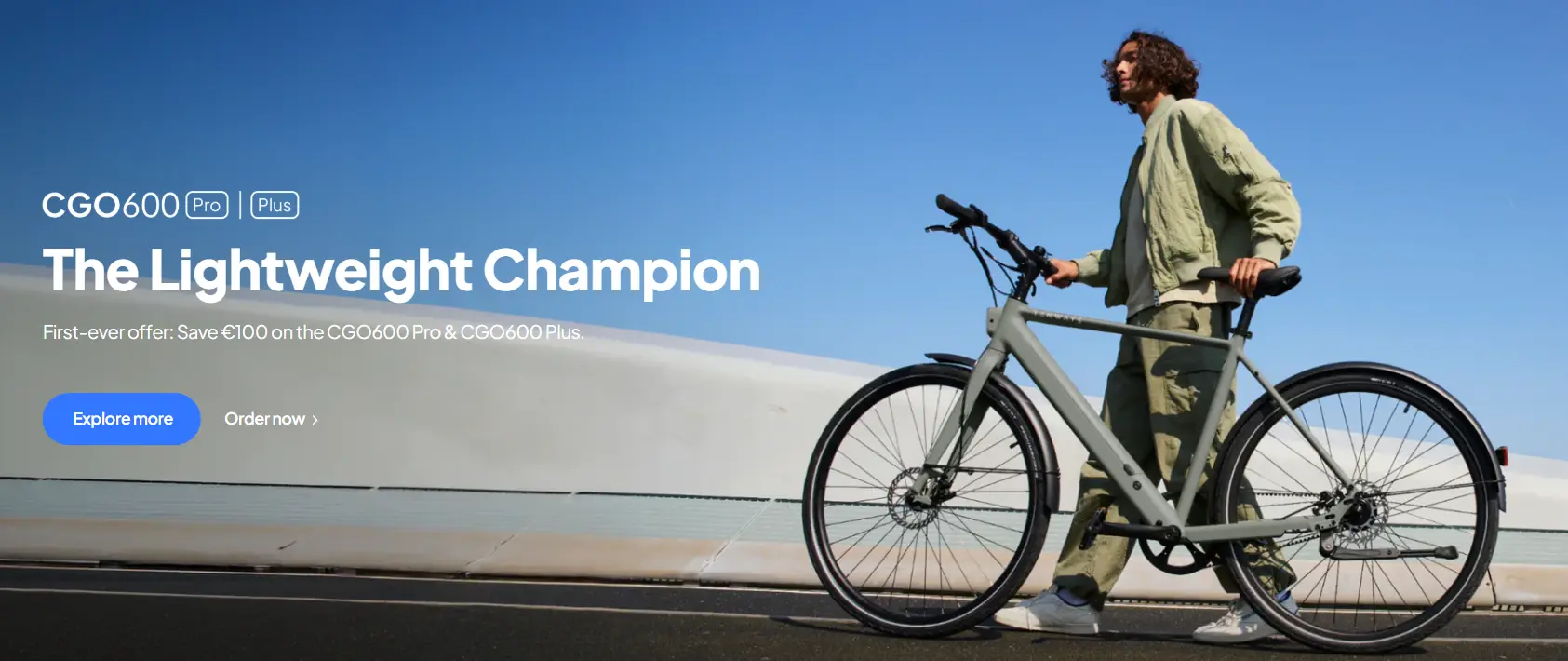
TENWAYS focuses heavily on clean, modern urban electric bicycles.
The CGO series is designed around relatively lightweight construction, minimalist styling and easy everyday riding.
Rather than using oversized batteries and heavy frames, these bikes focus on efficiency and a riding experience closer to a conventional city bicycle.
This makes them particularly suitable for short and medium-distance urban commuting.
Best for: Lightweight city commuting.
Why consider it: Clean design, easy handling and strong urban positioning.
10. Decathlon E-Bikes — Best Value for Everyday Riders
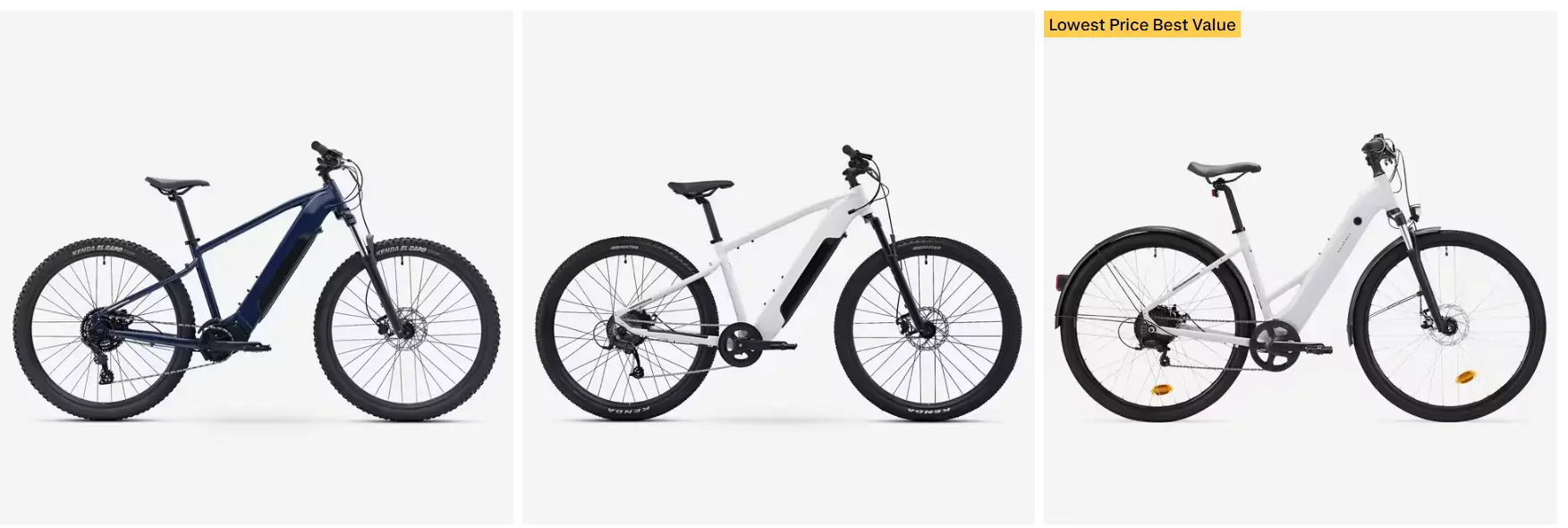
French retailer Decathlon has helped make electric bikes accessible to a much wider European audience.
Its Spanish range currently covers multiple categories, including urban, trekking, folding and electric mountain bikes.
This broad selection makes Decathlon particularly relevant for first-time buyers who want to compare different types of e-bikes without immediately entering the premium segment.
Its physical retail presence can also be valuable for riders who prioritize convenient maintenance and after-sales support.
Best for: First-time buyers and value-conscious riders.
Why consider it: Broad product range, accessible pricing and extensive retail network.
Which E-Bike Is Best for Different Riders in Spain?
The best electric bike depends on how and where it will be used.
Riding Scenario | Recommended Type |
|---|---|
Daily city commuting | City E-Bike |
Longer commuting | Trekking E-Bike |
Hilly urban routes | Mid-Drive E-Bike |
Mountain and trail riding | E-MTB |
Apartment living | Lightweight / Folding E-Bike |
Bike + public transport | Folding E-Bike |
Weekend touring | Trekking E-Bike |
Premium daily mobility | High-End Commuter E-Bike |
For riders in larger cities such as Madrid, Barcelona and Valencia, city and lightweight e-bikes can provide an efficient solution for everyday transportation.
For longer journeys or mixed road conditions, trekking models such as the Canyon Pathlite:ON or CUBE Kathmandu Hybrid offer greater versatility.
Riders exploring mountainous areas may prefer performance-oriented e-MTBs such as the BH iLynx+, while lightweight models from Desiknio and TENWAYS can appeal to urban riders who prioritize simplicity and easy handling.
What Should You Look for When Buying an E-Bike in Spain?
Battery and Real-World Range
Do not choose an electric bike based only on the maximum advertised range.
Actual range depends on terrain, rider weight, assistance level, weather, tire pressure and riding style.
If your normal route includes hills or longer distances, choosing additional battery reserve can make everyday riding more reliable.
Motor System
Hub motors are a practical option for many relatively flat urban routes.
For longer distances and frequent climbing, mid-drive systems can provide more natural assistance and work more effectively with the bicycle's gearing.
The best motor is therefore not necessarily the most powerful one, but the system that matches the intended riding environment.
Comfort and Frame Design
Frame geometry becomes increasingly important as riding distance increases.
City and step-through frames generally prioritize an upright and comfortable riding position, while trekking bikes provide a balance between comfort and efficiency.
For urban riders, step-through frames can also make frequent stopping and starting easier.
Practical Equipment
For everyday transportation, practical features can matter more than headline specifications.
Useful commuter equipment includes integrated lights, fenders, rear racks, hydraulic disc brakes, kickstands and removable batteries.
After-Sales Support
An e-bike contains batteries, motors, controllers, displays and other electronic components that may eventually require service or replacement.
Before purchasing, riders should consider the availability of spare parts, replacement batteries and technical support.
What Can E-Bike Brands Learn From the Spanish Market?
Looking at the brands competing in Spain reveals several clear product directions.
Established Spanish companies such as Orbea and BH have strong positions in performance and premium cycling, while Moma addresses more practical urban mobility needs. Desiknio represents the growing lightweight premium segment, while Legend focuses on urban and folding mobility.
European brands also show strong demand for trekking, long-distance and premium commuter e-bikes.
For distributors and emerging e-bike brands entering Spain, this means there is no single product strategy that fits the entire market.
A more effective product portfolio may include:
City e-bikes for everyday commuting
Step-through e-bikes for comfort and accessibility
Trekking e-bikes for longer journeys
Lightweight e-bikes for urban mobility
Folding e-bikes for compact storage and mixed transportation
Cargo e-bikes for family and commercial use
Battery capacity, motor systems, frame geometry, accessories and price positioning should then be adapted to the intended customer group.
FAQ
What are the best Spanish e-bike brands?
Orbea, BH Bikes, Moma Bikes, Desiknio and Legend E-Bikes are notable Spanish or Spain-developed brands covering different areas of the electric bicycle market.
Orbea and BH have particularly strong backgrounds in performance cycling, while Moma, Desiknio and Legend provide different approaches to urban and everyday mobility.
What is the best electric bike for commuting in Spain?
For most urban commuters, a city or step-through e-bike with comfortable geometry, sufficient real-world range, reliable brakes and practical commuter equipment is a good choice.
For longer journeys, a trekking e-bike may offer better comfort and versatility.
Which European e-bike brands are available in Spain?
In addition to Spanish brands, riders can find European brands such as Canyon, CUBE, Riese & Müller, TENWAYS and Decathlon in the Spanish market.
These brands cover categories ranging from affordable urban bikes to premium trekking and long-distance e-bikes.
Are Spanish e-bike brands good?
Spain has a long-established bicycle industry, with companies such as Orbea and BH having extensive experience in bicycle development.
Newer and more urban-focused brands have also expanded the Spanish e-bike market with lightweight, folding and commuter-oriented products.
The best choice should still be based on the individual model, components, battery, motor system and after-sales support rather than nationality alone.
What type of e-bike is best for Spain?
For everyday use, city, trekking and step-through electric bikes offer the broadest versatility.
Mountain e-bikes are better suited to recreational trail riding, while folding and lightweight e-bikes are particularly useful in dense urban environments.
Looking for E-Bikes for the Spanish Market?
For distributors, retailers and emerging e-bike brands, understanding popular products in Spain is only the first step.
Developing a competitive e-bike requires the right combination of frame design, battery capacity, motor system, display, drivetrain, brakes and accessories.
Nordvia provides OEM and ODM electric bike solutions for European markets, including city, trekking, step-through, folding and cargo e-bikes.
Product configurations can be adapted to different riding scenarios, customer groups and price segments, helping brands and distributors develop electric bikes that better match the needs of the Spanish and wider European markets.
Conclusion
Spain's electric bike market combines strong domestic bicycle manufacturers with established European brands.
Orbea and BH represent Spain's performance cycling heritage, while Moma, Desiknio and Legend address different areas of urban and everyday mobility. German brands such as Canyon, CUBE and Riese & Müller provide strong trekking and premium options, while TENWAYS and Decathlon broaden the market with lightweight and accessible alternatives.
Rather than simply choosing the biggest battery, most powerful motor or most expensive model, riders should consider their actual riding distance, terrain, comfort requirements and daily use.
For e-bike brands and distributors, the same lesson applies: understanding these different riding scenarios is essential when selecting or developing products for the Spanish market.
RELATED NEWS
-
 What Is the Difference Between an E-Bike Factory and a Trading Company?Choosing between an e-bike factory and a trading company can significantly affect purchasing costs, product quality, customization flexibility and long-term profitability.An e-bike factory manufactures electric bicycles and typic
-
 Why Germany Is Home to Some of Europe's Best E-Bike Brands Germany is widely recognized as the center of Europe's e-bike industry. Home to world-class component suppliers such as Bosch, Pinion, and Rohloff, Germany has built a strong reputation for engineering quality, innovation, and product reliab
-
 Spain is becoming an increasingly attractive market for electric bikes. From daily commuting in Madrid and Barcelona to coastal routes, mountain trails and weekend touring, e-bikes offer a practical way to travel farther with less effort.The Spanish market also has a strong mix of local and European
