



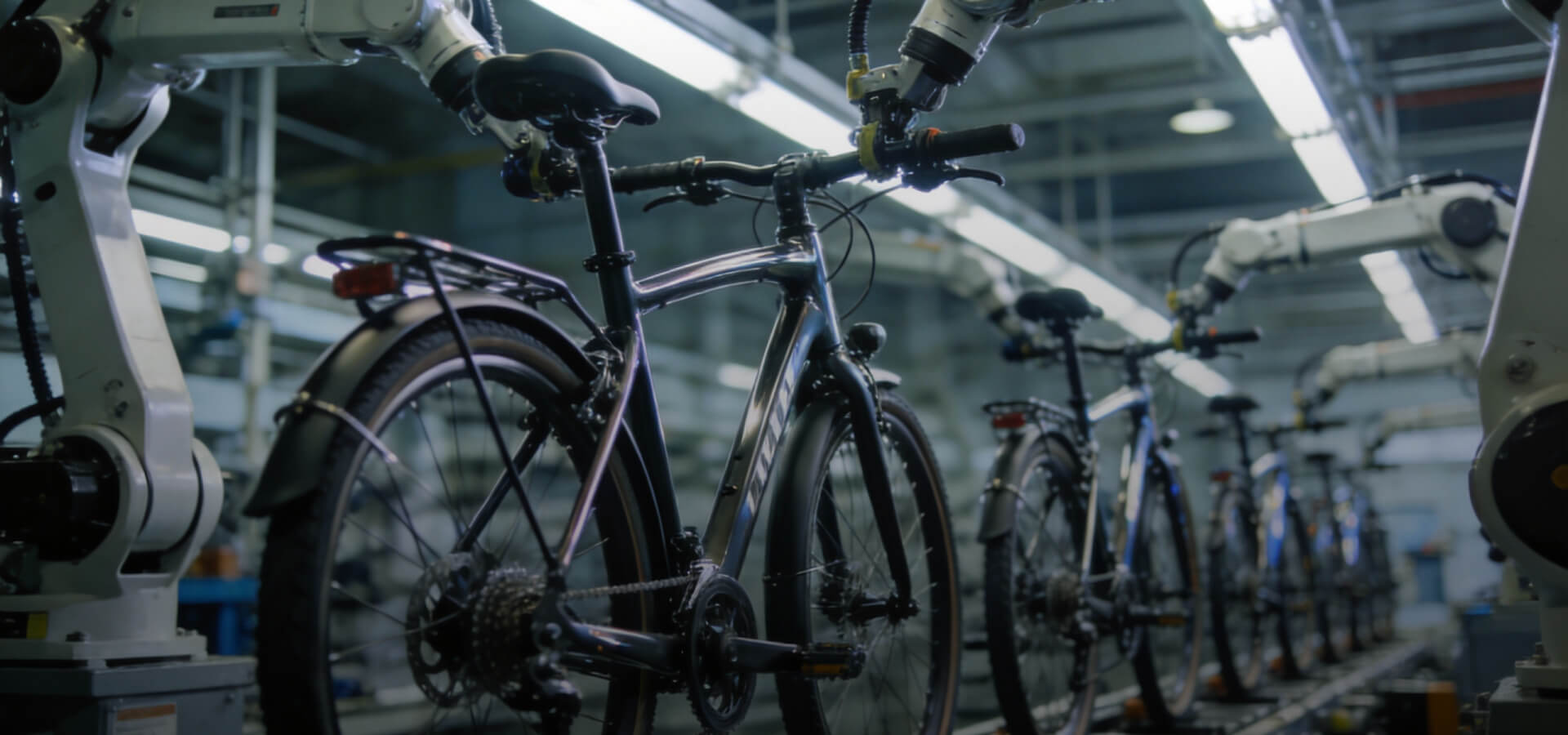

Most European e-bike brands lose their first season not to design or marketing, but to a supplier that looked like a factory and behaved like a reseller. Finding an e-bike manufacturer is a filtering problem: you start with 12 to 20 candidates and work down to one, with evidence at every gate. This guide is written from the supply side - we build e-bikes for European brands - and every criterion below is something you can verify yourself, without taking a supplier's word for it.
Quick answer: how do you find an e-bike manufacturer?
Finding an e-bike manufacturer takes 6-10 weeks of structured work across seven steps: define your brief, build a longlist of 12-20 candidates, screen manufacturing capability, verify certification for your target market, compare MOQ, FOB cost and lead time on the same basis, audit the factory, then validate with a sample and a 20-50 unit pilot order. Three of those steps remove most candidates: certification verification, the factory audit and the pilot batch.
Key takeaways
Vetting a manufacturer takes 6-10 weeks; brands that skip the audit and pilot stages usually change supplier inside a year.
Bring 12-20 candidates into screening and three into sampling. A shorter list turns the decision into a price comparison.
For the EU, the baseline is EN 15194 conformity for the complete bike plus UN 38.3 evidence for battery transport. Ask for certificate numbers, never screenshots.
Compare MOQ, tooling, FOB cost and lead time in one table. Quotes structured differently cannot be compared line by line.
A 30-minute screen per candidate removes roughly half of a longlist before you spend money on samples.
Order one or two samples, then a 20-50 unit pilot. Move to full volume only when the pilot hits its acceptance criteria.
What "manufacturer" actually means: factory, ODM platform or trading company
A manufacturer owns or controls the production processes it sells: frame welding, painting, assembly and final inspection happen on its own line, under its own quality system. An ODM platform owns engineering and design but may subcontract part of the build. A trading company owns neither - it resells capacity bought elsewhere. All three can be legitimate partners. The mistake is buying at trading-company prices while believing you bought factory control, because you inherit an extra margin layer, a longer information chain and less influence over your own lead time.
Three supplier models and what each one costs you
Model | What they own | What you gain | What you give up |
|---|---|---|---|
Vertically integrated factory | Frame welding, powder coating, assembly, end-of-line testing, own product certificates | Direct control of lead time and spec changes; cost transparency down to component level | You must bring the design and the engineering resource; minimum order quantities are set by tooling |
ODM platform | Engineering, design library, testing, sometimes tooling - welding may be subcontracted | Faster time to market; you do not need in-house engineering to launch | Platform constraints on frame and battery layout; you have to verify who actually welds and paints |
Trading company | Sourcing network, export documentation, sometimes EU warehousing and invoicing | Convenience, small orders accepted, EU-based invoicing and support | Factory-level control, cost transparency, escalation speed when something goes wrong |
How to spot a trading company posing as a factory
There is nothing wrong with a trading company. There is a serious problem with a trading company that tells you it is a factory, because the whole basis of your costing, your lead-time planning and your problem-solving route is wrong. Five checks settle the question in under a week.
Check | What a factory shows | What a reseller shows |
|---|---|---|
Business licence scope | Scope includes manufacture of bicycles or electric vehicles | Scope lists wholesale, import and export, technology services only |
Live line view | Continuous, unedited video of the line with work in progress, at short notice | A pre-recorded clip, or "we will arrange a visit next month" |
Certificate holder | Certificate names the entity you are contracting with as the manufacturer | Certificate names a third party, or the listed models do not match your spec |
Cost structure | Can break down frame, motor, battery, assembly and packaging | Quotes a single unit price and cannot explain the components |
Lead-time answer | Answers with production steps and current queue position | Answers with a round number, or "it depends on your order" |
The 7-step vetting process at a glance
Each step ends in a decision gate: a written condition you either meet or do not. Brands that treat vetting as a conversation instead of a gate usually rediscover the same problems during production, when changing supplier costs a season rather than a week.
Step | What you do | Decision gate | Typical duration | Output |
|---|---|---|---|---|
1 | Define the brief | Specification fixed in writing before any supplier call | 3-5 days | Spec sheet and target volumes |
2 | Build a longlist | At least 12 candidates from at least three different channels | 1 week | Longlist with source notes |
3 | Screen capability | At least 5 pass the 8 questions, at least 3 disclose process detail | 1-2 weeks | Shortlist of 3 to 5 |
4 | Verify certification | Certificate numbers verified and models matched for your market | 1 week | Compliance dossier |
5 | Compare commercial terms | Identical quote structure across candidates; any price gap explained | 2-3 weeks | Comparable quote matrix |
6 | Audit the factory | No structural red flags; corrective actions closed in writing | 1-2 weeks | Audit report |
7 | Sample and pilot | Pilot batch meets the agreed acceptance criteria | 4-6 weeks | Approved supplier and production PO |
Step 1: Define the brief before you contact any factory
A brief is the document that makes eight quotes comparable. Without one, every supplier answers a different question, and the only thing you can compare is the number at the bottom of the page - which is exactly how brands end up choosing on price alone.
The nine specifications every factory will ask you for
Wheel size and frame format - city, trekking, folding, cargo or step-through.
Frame material and load rating - including the total system weight you intend to declare.
Drive type and torque target - mid-drive or hub, and the outcome you want (hill climbing, range, cost).
Battery specification - voltage, capacity in Wh, cell format, removable or integrated.
Drivetrain and brakes - preferred brands, and which alternatives you will accept.
Display and connectivity - controller ecosystem, and whether you need app or fleet integration.
Target market and certification route - country of sale determines the compliance package.
Volumes - annual target, first order quantity, and whether you accept shared tooling.
Branding and documentation - retail packaging, manual languages, labels required by the market.
Send these nine and you will get comparable answers within days. Skip them and you will get a catalogue.
What to leave flexible, and what never to leave open
Being specific everywhere slows the project down; being vague in the wrong places gets expensive. Draw the line like this.
Keep flexible | Never leave open |
|---|---|
|
|
One practical note: write the brief so that a factory can say no. A shortlist improves the moment a supplier declines because your load rating or waterproofing requirement does not fit their platform. A candidate that accepts every requirement without asking a single question has not understood it.
Step 2: Build a longlist from sources that filter for you
Aim for 12 to 20 candidates drawn from at least three channels. The purpose of the longlist is not to find the best factory - it is to make sure the best factory is in the room, because most brands choose from whatever appeared in the first two pages of a search result.
Five sourcing channels, ranked by reliability
# | Channel | Why it ranks where it does | What to collect |
|---|---|---|---|
1 | Trade fair exhibitor lists (Eurobike and national shows) | Exhibitors pass an application and carry a sunk booth cost; a presence you can date is hard to fake | Stand number, product lines shown, whether they exhibit as manufacturer or brand |
2 | Industry press coverage (Bike Europe and similar) | Editorial mention implies claims someone else checked | Article date, what was claimed, whether a factory visit was described |
3 | B2B platforms (Alibaba, Made-in-China, Global Sources) | Largest pool, lowest average verification - useful only when filtered by Step 3 | Business licence, transaction history, whether they list process capability or only products |
4 | Reverse-engineering comparable brands | Frame plates, manuals and battery labels frequently carry the manufacturer's name or code | Photos of the plate and label, model reference, approximate retail volume |
5 | Industry clusters and associations | Geographic concentration means component suppliers sit within a short drive, which affects cost and speed | Cluster members list, whether the factory is inside the cluster or only nearby |
How to search for factories instead of products
Most searches for e-bike suppliers return products, because supplier websites are written to sell bikes rather than describe production. Adjust the query to capability language and the same search engine returns a different, much shorter list.
Search for processes, not products. Queries such as
e-bike frame welding OEM,powder coating line electric bikeorbattery pack assembly ISO 9001surface factories that describe how they build.Search for the certificate, not the bike.
EN 15194 manufacturerandISO 9001 e-bike factoryreturn entities that publish compliance information.Use title-scoped searches (
intitle:manufacturer,intitle:OEM) to cut out retailers that merely mention the words.Search in the supplier's own language. For Chinese factories, capability pages in Chinese often contain far more process detail than their English site.
Check who exhibits under "OEM/ODM" rather than under a brand name. That single label filters a fair number of brand resellers out of the list.
Step 3: Screen manufacturing capability in 30 minutes
Thirty minutes per candidate is enough, provided your questions are the right ones. The rule is simple: you are not looking for a good answer, you are looking for a specific one. Vague but friendly answers are the most expensive thing in this process.
Eight screening questions, and the answers that should worry you
Question | Answer that passes | Answer that should worry you |
|---|---|---|
Do you weld and finish frames yourself? | Names the process (TIG or robotic), states daily frame output and jig count | "We work with long-term partners" |
Where are frames painted, and how is colour changed? | In-house powder coating line, capacity per shift, colour change procedure | Cannot say, or names no facility |
Who assembles the battery pack? | In-house pack line, cell testing, spot welding, pack ageing, cell brand named | "Standard battery, no problem" |
Which models are currently certified for our market? | Specific model numbers and certificate numbers | "We can do any certification you need" |
How many lines do you run, and what is booked now? | Line count plus current queue in weeks | "It depends on your order" |
Who signs off final inspection, and against what checklist? | A named quality manager and the actual inspection items | "100% inspection" with no list |
Can you support a first order of 100 units? | A clear yes or no, with the tooling and paint-batch conditions | Unconditional yes, then a changed price later |
Can our project be handled by an engineer? | The engineer joins the second call | "Sales will answer technical questions" |
Which documents to request in the first reply
Ask for numbers, not screenshots. A certificate number can be checked in a public database in two minutes; an image cannot be checked at all.
Business licence, with the scope of business legible - it is the first evidence of manufacturing activity.
ISO 9001 certificate number, issuing body and validity - ask for the scope statement, not just the certificate.
Product certification: certificate and the model list it covers.
Battery test evidence, including the UN 38.3 test summary for transport.
The most recent third-party factory audit report, if one exists.
On request, a video walk of the line - live rather than edited.
Nothing in this step is paperwork for its own sake. Every number you collect here is re-checked in Step 4 and Step 6, which is why suppliers who overstate their capability rarely make it to the audit.
Step 4: Verify certifications for your target market
For a pedal-assisted bicycle sold in the EU, the baseline is conformity with EN 15194 and CE marking; the battery needs separate evidence, including UN 38.3 for transport. Certification is the step where paperwork claims meet reality, and it is the cheapest place in the whole project to lose a supplier rather than a shipment.
Which certificates actually matter: EN 15194, CE, ISO 9001 and battery rules
Certification | Covers | Issued by | What you should collect |
|---|---|---|---|
EN 15194 (EPAC) | The complete pedal-assisted bicycle: electrical safety, mechanical strength, EMC | Accredited test laboratory | Test report, certificate, list of tested models, and the standard version applied |
CE marking | The product's conformity for the EU market; for EPAC mainly the applicable machinery and EMC requirements | The manufacturer, by declaration of conformity | A signed declaration naming the manufacturer as the legal entity and listing the standards applied |
ISO 9001 | The factory's quality management system, not the product | An accredited certification body | Certificate number, scope of certification, validity dates |
UN 38.3 | Lithium battery transport testing | Test laboratory | The test summary report. It proves transport safety, not vehicle safety |
Battery safety for light electric vehicles | The battery pack as installed on the vehicle | Test laboratory | Ask which battery standard the pack was designed and tested against - a pack with only UN 38.3 has been tested for shipping, not for riding |
EU Battery Regulation (EU) 2023/1542 | Battery labelling, documentation and due-diligence obligations, phased in from 2024 | Manufacturer, supported by documentation | A compliance statement plus the correct battery labels and documentation for your market |
UKCA | Great Britain, where CE marking alone does not cover the market | The manufacturer, by declaration | A separate declaration if you sell in Great Britain |
Five checks to confirm a certificate is genuine
The number exists in the issuing body's public database. If the certificate cannot be looked up, it is a marketing document.
The holder matches the entity you are contracting with. A certificate issued to a related trading arm, with no explanation, transfers no protection to your order.
The model list includes your model - not a "similar platform" and not a predecessor with the same frame.
Dates and version are current. An older standard version raises the question of whether the current requirements were ever tested.
The report pages are complete. Request the full report, including the tested sample photographs; cover pages and a summary are easy to obtain and easy to misrepresent.
One question tests all five at once: ask the supplier for a detail only the tested sample could confirm, such as the maximum assisted speed recorded in the report. Suppliers who own the certificate answer immediately. Those who do not tend to change the subject.
Compliance gaps that only show up after you ship
Gap | How it appears | Prevention |
|---|---|---|
Assisted speed or motor rating inconsistent with the declaration | Customs or market surveillance test differs from the declared value; platform listing is suspended | Measure cut-off speed and rated power on the sample and compare against the declaration |
Charger without matching conformity evidence | The bike clears, the charger does not | Include the charger in the compliance dossier, not only the bicycle |
Labels, manual and packaging language mismatched to the market | Retail or marketplace rejection, rework of packaging after shipping | Approve label artwork and manual template before production, not after |
Battery transport documentation missing | Forwarder refuses the booking or applies a surcharge; shipment sits at origin | Collect the UN 38.3 summary before booking freight |
Battery Regulation documentation not in place | Marketplace and retail compliance checks fail after listing | Confirm labelling and documentation obligations for your market in writing |
Step 5: Compare MOQ, FOB cost and lead time on the same basis
Three quotes are comparable only if they describe the same bicycle and the same scope. In practice they rarely do, which is why the cheapest quote in the inbox is often the most expensive decision in the project.
What a realistic MOQ looks like for a new brand
The minimum order quantity is set by the least flexible step in the build, usually frame tooling and paint batch size - not by the supplier's appetite. 100 units is a typical entry point for a first production run; below that, suppliers either decline the project or absorb it through shared tooling and shared paint runs, which limits colour and frame options.
MOQ is negotiable in structure, not in physics. You can lower a first order by sharing tooling with an existing model, by accepting a standard frame platform and differentiating through components and branding, or by joining a scheduled paint batch. You cannot lower it by asking, repeatedly, in a slightly different way. For a detailed breakdown of how these variables move the number, see e-bike MOQ explained.
How to read an FOB quote line by line
Quote line | In FOB? | What to check |
|---|---|---|
Frame, motor, battery, assembly labour, packaging | Yes | All five should be visible as separate lines, not compressed into one unit price |
Tooling or mould amortisation | Usually separate | Ask whether it is refundable at volume, and whether the tooling is yours |
Certification and testing | Usually separate | Ask whether it is charged once per model or per order |
Sample fee | Separate | Ask whether it is credited against the first production order |
Freight, insurance, EU duty and inland delivery | No | Price landed cost separately. Anti-dumping measures apply to e-bikes originating in China - confirm the current measures in force before modelling landed cost, see EU duties and tariffs |
Spare parts and warranty kit | Often separate | Agree what the warranty kit contains and which failure rate triggers a claim |
The single most useful question in this step is not about price. It is: "Which component would you change to hit a lower target, and what would that change cost me?" A factory that answers that question precisely is quoting from its own cost structure. A trading company usually cannot answer it at all. For a full breakdown of what drives unit cost, see what determines FOB cost.
Lead time benchmarks, and where the delays actually happen
Phase | Typical duration | Where it slips |
|---|---|---|
Specification freeze to first sample | 3-5 weeks | Component availability, and specifications that change mid-development |
Sample review and iteration | 1-3 weeks | Design loops; each accepted change restarts tooling or paint |
First production batch | 6-8 weeks | Cell supply, paint queue, and the production calendar around Lunar New Year |
Certification and testing | 2-4 weeks | Laboratory scheduling; runs in parallel if planned early |
Freight to Europe | 4-8 weeks sea, 1-2 weeks air | Port congestion, documentation errors, battery paperwork |
Two scheduling rules save more time than any negotiation. First, ask for your queue position in writing - a factory with a two-month queue is slower than a smaller factory with a two-week queue, whatever the printed lead time says. Second, plan production to finish before the Lunar New Year shutdown: missing that window costs three to four weeks, every year, for brands that did not plan for it.
Step 6: Audit the factory before you commit
An audit has one purpose: to check whether the documents you collected in Steps 3 and 4 describe the plant you are standing in. It is not a tour, and its value comes from looking at the right eight places rather than at the whole building.
What to inspect on site: the eight stations that matter
# | Station | What to look for |
|---|---|---|
1 | Frame welding | Number of jigs against stated output; weld consistency; whether frames are queued or built to order |
2 | Surface preparation and powder coating | Whether the line is running, how colour changes are handled, and how bare frames are stored |
3 | Frame measurement after coating | How geometry is verified, and whether measurement records exist per batch |
4 | Battery pack assembly | Cell testing before assembly, spot weld control, BMS installation, pack ageing and storage conditions |
5 | Final assembly line | Station instructions, torque tool control, and whether the line is balanced or bottlenecked |
6 | End-of-line testing | Electrical test, lighting and brake checks, water resistance, and a ridden or dyno test |
7 | Incoming inspection and warehouse | How incoming components are quarantined; whether cell storage is temperature-controlled and separated |
8 | Packaging and documentation | Retail packaging, manual version control, and market-specific labels on the line |
For the full 40-point version of this list, including the documents to request per station, see the 40-point factory audit checklist.
Remote audit: what you can verify without flying
Not every brand can send someone. A structured remote audit verifies more than most buyers expect.
A live, unedited walk of the line. Ask the camera to move to a station you name at random, and ask what is being built on it right now.
Work in progress. Unfinished frames, part-painted batches and packed cartons indicate production today. An empty line with finished goods only tells you about last month.
Records on camera. Cell storage logs, pack ageing records, end-of-line test sheets and the calibration status of torque tools.
A third-party inspection from an established inspection company, scoped to the eight stations above rather than a generic checklist.
A video call with the engineer who will own your project, not only the sales contact.
Walk-away red flags
Refusal of an unannounced visit, or of live line video, with reasons that keep changing.
No work in progress on any line, at any hour.
Cells bought in, but battery packs presented as own production with no cell traceability.
The certificate holder is a different legal entity and no explanation is offered.
A quote far below the component cost of the specification you asked for.
Reluctance to put tooling ownership, MOQ and lead time into the contract.
The technical contact changes more than once before you have placed an order.
One red flag is a question worth asking. Three red flags in a single visit is a decision.
Step 7: Validate with a sample, then a pilot batch
The sample proves the factory can build your specification once. The pilot proves it can build it the same way, repeatedly, at production speed. Confusing the two is how brands discover at 500 units what a single sample never showed.
What to test on the sample, beyond the first ride
Strip and inspect. Harness routing, connector sealing, and cable protection at the head tube and bottom bracket.
Weigh it and compare against the specification weight, including battery.
Verify assisted speed and rated power against the declaration, not against the marketing description.
Run a real range test with a known rider weight and a fixed route; compare the result to the claimed figure.
Check the charger and the labels against the requirements of your market, including the documentation in the box.
Measure critical geometry and cross-check against the approved drawing.
Torque-check every fastener a dealer will touch during assembly or after-sales service.
Pilot order: how many units and what to measure
A pilot batch of 20-50 units is enough to expose process stability without committing a season of working capital. Treat it as an acceptance test with a decision attached, not as a small order.
Metric | Target | How to measure |
|---|---|---|
First-pass yield | Agreed with the factory, e.g. 95% or above | End-of-line records per unit, cross-checked with your own inspection on arrival |
Dimensional variance | Within drawing tolerance on frame and mounting points | Sample measurement of the batch, not only the golden sample |
Packaging integrity | No damaged units on arrival | Photograph the container and the first layer before unloading |
Lead-time deviation | Within the agreed buffer | Compare the written plan against the actual ship date |
Early field failures | Tracked from day one | Dealer feedback and warranty claims in the first 90 days, treated as warranty data |
Contract essentials: tooling ownership, IP, NDA and payment terms
Everything that will be contested later should be written before the first production order, while both sides are still friendly.
Tooling and moulds: who owns them, where they are stored, and how they are transferred or returned if the relationship ends. Agree whether the amortisation is refundable at volume.
Design ownership and NDA: covering drawings, packaging artwork and software configuration, signed before you share specifications. See NDAs and tooling ownership in e-bike OEM contracts.
Exclusivity: whether your model, frame or market is exclusive, for how long, and in which channels.
Acceptance criteria: attach the specification sheet and the pilot metrics as an annex. Acceptance should not depend on interpretation.
Warranty and spares: duration, coverage, how replacement parts are shipped, and how long spare parts remain available for the model.
Payment terms: deposit and balance split, milestones tied to inspection, and the remedy if the ship date slips. See e-bike payment terms.
Change control: what happens when the factory wants to substitute a component after sampling - who approves, and how the approval is recorded.
A project that reaches this point with a signed brief, a verified compliance dossier, an audit report and a pilot batch is not just a sourcing decision. It is a product programme - and it is also a good moment to review OEM vs ODM one last time, because the contract you are about to sign locks in which of the two you have actually bought.
Supplier scorecard: how to rank your final two or three candidates
Score candidates on evidence, not impressions. Weight the criteria below, require a minimum total before a supplier advances, and keep the sheet - it is the baseline you will measure the relationship against twelve months later.
Criterion | Weight | What counts as evidence |
|---|---|---|
Manufacturing and process control | 25 | Audit findings across the eight stations; weld and pack assembly evidence |
Certification and compliance | 20 | Verified certificate numbers and the model list matching your specification |
Cost structure and commercial terms | 20 | Itemised FOB quote, tooling terms, warranty kit contents |
Lead-time reliability | 15 | Queue position in writing, historical on-time performance, holiday planning |
Communication and engineering support | 10 | Direct engineer access, turnaround time on technical questions |
Pilot performance | 10 | First-pass yield, defects found, packaging condition |
Set the threshold before you score, not after: 75 out of 100 is a workable floor, and a zero on certification or on tooling ownership should disqualify a candidate regardless of total.
One caution worth writing down. The highest total is not automatically the right partner. A large factory that will place your 300-unit order twentieth in its queue is a worse partner than a mid-size factory that will place it third. Ask every candidate where your order would sit, and treat the answer as part of the lead-time score.
Timeline and budget: what finding a manufacturer really costs you
The vetting stage is the cheapest insurance in the project. Switching supplier after launch costs a season of sales plus unsold stock, which is an order of magnitude more than everything in the table below.
Stage | Elapsed time | Cash cost | Your time |
|---|---|---|---|
Brief and longlist | 1.5 weeks | None | ~8 hours |
Capability screening | 1-2 weeks | None | ~10 hours |
Certification verification | 1 week | None | ~4 hours |
Sampling and iteration | 3-5 weeks | Sample fee and shipping, frequently credited against the first order | ~6 hours |
Factory audit | 1-2 weeks | Travel, or a third-party inspection fee | ~16 hours plus travel |
Pilot batch | 4-8 weeks | Pilot purchase order, plus tooling if applicable | ~8 hours |
Steps overlap, so total elapsed time is 6-12 weeks rather than the sum of the column. On cash, almost everything except travel and third-party inspection flows into the product: sample fees and tooling are usually credited or amortised. The genuinely unrecoverable cost is your own time - which is another reason to run the eight screening questions before spending it.
Seven mistakes that make brands switch suppliers within a year
Choosing on unit price alone. The cheapest quote usually differs in what it excludes; total landed cost is the number that matters.
Skipping the pilot. A sample proves possibility; a pilot batch proves repeatability.
Not writing down tooling ownership. Tooling paid for but not owned is leverage held by someone else.
Sharing drawings before an NDA. The most common way for a brand's frame to appear in another catalogue.
Accepting a certificate that names a different entity or model. It protects the supplier, not your order.
Ignoring the queue. Printed lead times describe an average, not your position in it.
Talking only to sales. The engineer who will build your product is the person who knows what can and cannot be done.
FAQ: finding and vetting an e-bike manufacturer
How long does it take to find and vet an e-bike manufacturer?
Plan for 6-12 weeks from fixed brief to approved supplier, with steps running in parallel. Sampling, auditing and pilot production dominate the calendar. A fast result usually means a step was skipped rather than compressed.
Do I need to visit the factory in person?
A first visit is not essential, but verification is. If travel is not possible, use a live unedited line walk plus a third-party inspection scoped to the eight key stations. See the 40-point factory audit checklist for the scoped version.
How much does it cost to find and vet a manufacturer?
The direct cost is small: sample fees, shipping, a third-party inspection or a trip. Most sample fees are credited against the first production order. The larger unrecoverable cost is your own time, which the screening stage is designed to protect.
Can a manufacturer sign an NDA before I share my design?
Yes, and it should be a precondition rather than a favour. Make sure it covers drawings, packaging artwork and tooling, and that it states who owns the tooling when the relationship ends. An NDA that does not mention tooling protects less than buyers assume.
What is a realistic MOQ for a new e-bike brand?
Around 100 units is a common entry point, determined by frame tooling and paint batch size rather than sales ambition. Lower first orders are possible with shared tooling or a standard platform, but they narrow your frame and colour options.
Should I work with a manufacturer in China or in Europe?
It depends on three variables rather than on preference: annual volume, certification complexity and how sensitive your cash flow is to lead time. Chinese manufacturers generally offer wider component supply and lower tooling thresholds; European assembly shortens lead time and simplifies compliance conversations at a higher unit cost.
What should I do if a factory fails my audit?
Separate correctable findings - documents, records, labelling, housekeeping - from structural ones such as no in-house process control or a certificate that does not match the contracting entity. Ask for a written corrective action plan with dates for the first group, and move on from the second.
How many manufacturers should I shortlist?
Twelve to twenty in the longlist, three to five after screening, two or three in sampling, and one approved supplier plus one qualified backup. A second supplier is not disloyalty - it is the only protection against a single point of failure in your supply chain.
Next step: get your vetting questions answered by a factory
The fastest way to test steps 3 to 5 is to run them against a real supplier. We build e-bikes for European brands, so the questions below are ones we answer every week - including the uncomfortable ones about queue position and what we do not make in-house.
What to prepare for your first call
The nine specification items from Step 1, even in draft form.
Your target market or markets, and the certification route you expect.
Your first order quantity, annual target, and whether you accept shared tooling.
Your timeline, and the date by which you need bikes on shelves.
What you get back within 24 hours
A quote structured by component, so it can be compared with other suppliers.
MOQ options with and without shared tooling, and what each one changes.
The model list currently certified for your market, with certificate numbers.
A lead-time plan including our current queue position at the time of quoting.
Talk to a factory engineer - bring the brief, and we will answer in the same structure this guide describes.
RELATED NEWS
-
 Germany is one of Europe's important markets for electric cargo bikes, with growing applications in family transportation, urban commuting, and commercial delivery. From compact longtail e-bikes to heavy-duty cargo tricycles, manufacturers offer a wide range of solutions for different mobility needs
-
 What Determines E-Bike Shipping Costs from China to Europe?The most effective ways to reduce e-bike shipping costs from China to Europe include optimizing export packaging, maximizing container utilization, selecting suitable freight methods, consolidating orders and planning shipments in advance.Fo
-
 Yes, you can sell Chinese-made electric bikes under your own brand in Europe. Many European e-bike brands work with Chinese OEM and ODM manufacturers to develop private label electric bikes, customize components, and manage production costs.However, selling e-bikes under your own brand involves more
